
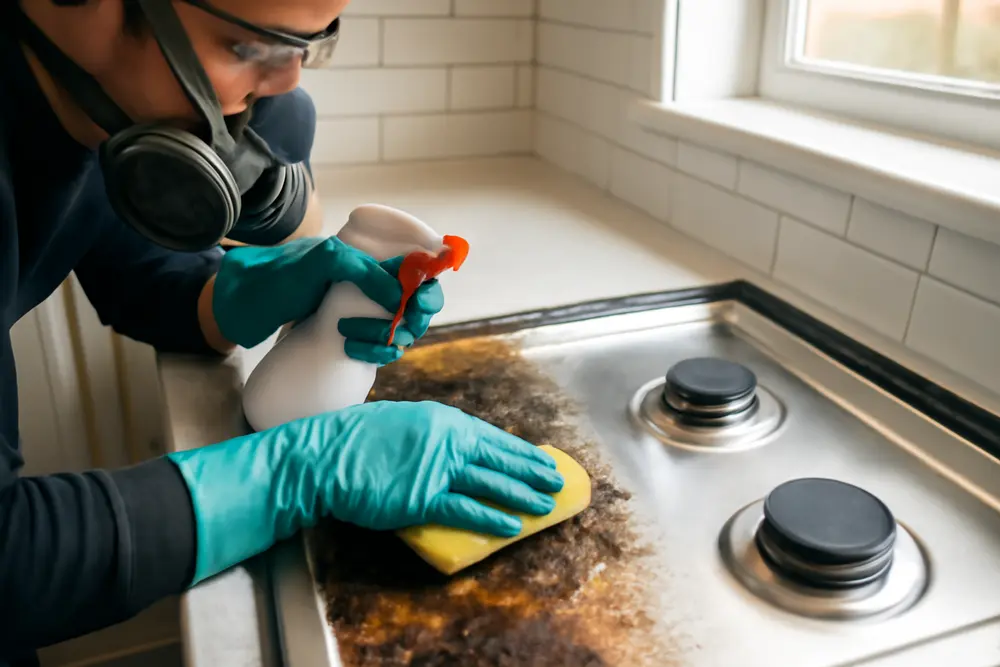
If you burned chicken on the stovetop and now your kitchen smells like a diner hood at 2 a.m., you probably met the sneakiest enemy in fire restoration: protein fire residue. It is a nearly invisible, sticky film from low-heat kitchen mishaps that clings to everything, laughs at air fresheners, and keeps stinking up the place long after the smoke clears. You can’t just wipe it with soapy water and call it good. You need the right chemistry, the right order of operations, and a little grit. Here’s a straight-talking guide from a restoration pro on spotting the film, using enzymatic degreasers and solvents the right way, and knowing when to call in a certified team.
What Is Protein Fire Residue?
Protein residue forms when meat, eggs, dairy, or cooking oils burn or simmer too long at relatively low temperatures. Instead of fluffy black soot, you get a translucent, amber or yellowish film that rides the smoke and coats every surface it touches. It is hard to see, easy to smell, and wildly stubborn. It sticks especially well to painted drywall, cabinets, ceilings, light fixtures, textured ceilings, and any semi-gloss finish. If you’ve ever walked into a home that looks clean but smells like rancid gravy, that is protein residue throwing a party.
Unlike typical carbon soot, protein residue is a cocktail of denatured proteins, fats, and other organic compounds. That mix bonds to surfaces, wicks into pores, and resists basic cleaners. It does not just sit there like dust. It chemically grips, which is why a quick rinse rarely works and why odors keep returning after a weekend of scrubbing with dish soap.
Why Do Odors Linger?
Short answer: trapped VOCs and tight bonding. Those burnt-protein compounds produce strong volatile organic compounds that keep evaporating long after the flame-out. The sticky film locks the odor source in place and slowly off-gasses. Porous items like drywall, unfinished wood, and fabrics absorb the odor molecules. Your HVAC system then drafts the smell everywhere, especially if the range hood, filters, and duct returns caught the plume. Left alone, the film can etch finishes, pit metals, and permanently stain some coatings. It is not just an odor problem. It is a surface damage problem with a PR campaign.
How To Spot The Invisible Film
Think detective, not decorator. Protein residue hides in plain sight, but it leaves clues if you look and feel for it.
Start where the incident happened, then follow airflow. Check directly above the stove, the underside of cabinets, the ceiling, the range hood, microwave vents, light lenses, and the nearest supply and return vents. Look for a hard-to-photograph sheen or slight yellowing. If the surface suddenly looks a little glossier than it used to, that is a red flag. Wipe a white microfiber cloth across a suspect spot. If it picks up a light amber film or smells like burned meat, you found it.
Use your nose as a map. Walk the room and pause near cabinets, ceiling corners, soft goods, and door trim. Odor often intensifies at transition points and air movement zones. Touch test works too. If a painted surface feels slightly tacky or greasy even after a wipe, you are dealing with protein residue. Do not forget the less obvious: inside cabinets, the top lip of door casings, the underside of shelves, inside the microwave cavity, and the stand mixer you swore you’d use more often. Smoke wraps around and finds the weirdest hiding spots.
For multi-room events, check hallways, adjacent rooms, and the HVAC filter. If the filter smells like soup gone wrong, the odor rode your airflow highway.
Cleaning Chemistry That Works
If you try to bulldoze protein residue with a harsh solvent first, you can smear it into a bigger mess. The trick is sequencing and dwell time, with products that target proteins and fats differently. Here is the winning playbook.
Start with enzyme action. Enzyme-based cleaners, often called enzymatic degreasers, contain proteins that break down other proteins at a molecular level. They do not nuke the surface. They surgically cut the protein chains that make the film cling and reek. You need patience though. Apply according to label, allow proper dwell time, and keep the surface damp with product so the enzymes can work. No rushing. No dry-down while you answer texts.
Follow with an alkaline degreaser or a compatible solvent. Once the enzymes weaken the protein bonds, you still have fats and sticky organics to remove. An alkaline cleaner lifts and emulsifies those lipids so you can wipe them away. On stubborn finishes or metal trim, a carefully selected solvent step can help, but always spot test. You are not trying to strip a finish unless it is already toast. Work from cleanest surfaces to dirtiest to avoid cross-contamination.
Rinse and neutralize. After the degreaser round, rinse with clean water or a neutralizer per product guidance. Leftover alkalinity can haze paint or damage finishes. Swap cloths often, use fresh solution, and never use the same bucket for the whole room. That just redeposits the funk.
Tools matter. Microfiber has better pickup than cotton. A HEPA vac with a soft brush helps collect dry particles and dust before wet cleaning. Avoid aerosol spraying into the air. It atomizes residue and spreads it. Apply product to the cloth or pad, then to the surface. For porous items, damp wipe in light passes to avoid overwetting and wicking smells deeper.
| Surface | Approach | Notes |
|---|---|---|
| Painted drywall | Enzymatic cleaner, then alkaline degreaser, rinse | Light pressure, change cloths often. Seal and repaint if staining persists. |
| Cabinets & trim | Enzyme first, mild solvent-safe degreaser | Spot test finishes. Clean undersides, hinges, and handles. |
| Ceilings & textures | Careful damp wiping, low moisture | Avoid soaking. Consider sealing with odor-blocking primer if staining remains. |
| Stainless & appliances | Enzyme, then non-abrasive degreaser | Wipe with grain. Do not use harsh abrasives that scratch and trap residues. |
| Fabrics & soft goods | Pre-treat with enzyme, launder per label | Some items need professional textile restoration or replacement. |
Safety first. Wear gloves and eye protection, ventilate, shut off ignition sources, and follow product labels. Oily rags can self-heat, so don’t ball them up in a trash can. Spread them to dry or store in a metal container with a tight lid until disposal.
Want more on the science of sequencing cleaners for smoke odor control? Restoration industry guides lay it out clearly, including chemistry and order of operations. See resources like Restoration Intel on smoke odor chemistry and this R&R Magazine explainer on degreasers.
Step-By-Step Pro Process
Professional restoration teams follow a structured plan, not a hope-and-pray wipe down. While every job is unique, here is how a typical protein-fire cleanup progresses.
Inspection and documentation. Pros identify residue type, measure the spread, check HVAC pathways, and map odor intensity. They photograph and document to align the plan with standards like the ANSI/IICRC S700 fire restoration standard.
Stabilization and removal. Any perishable food is tossed, charred or melted items are removed, and non-salvageables get cleared to reduce odor sources fast. Filters in the HVAC are replaced early so you are not pulling stink through the system while cleaning.
Source removal and cleaning. Technicians apply enzyme-based cleaners methodically from the ceiling down, then follow with alkaline degreasers or compatible solvents as required. They control moisture, change microfiber cloths constantly, and rinse so residues do not redeposit.
Odor elimination tools. After cleaning, they may deploy deodorization equipment based on occupancy and materials. Ozone generators are powerful for unoccupied spaces with controlled exposure and proper ventilation after treatment. Hydroxyl generators run in occupied spaces and are gentler on materials, though they may take longer. Thermal fogging recreates the smoke path with a deodorizing fog so it reaches the same cracks and crevices. Each tool has protocols, and pros select the right one for the space and materials.
HVAC attention. Pros assess and clean ductwork when inspection shows contamination, and they always address returns, supply registers, and the air handler area if impacted.
Sealing and repainting. If staining or residual odor remains in porous building materials after cleaning, a smoke-rated sealer or primer can lock in what cannot be fully removed. Then repaint. Skip this step and you risk odor bleed-through that makes you hate your new color in two weeks.
Verification. Final walk-throughs include nose-level checks, surface testing, and if needed, additional cleaning on hotspots before sign-off.
When Should You Call a Pro?
Yes, you can win some small battles with the right cleaners and persistence. But call a certified restoration company when any of this is true:
- The odor is strong days after thorough cleaning.
- The residue spread beyond the kitchen or into the HVAC.
- Ceilings, textured finishes, or painted walls show yellowing or gloss bands.
- Cabinet interiors, drawers, and contents are affected.
- Electronics were in the plume path. Protein residue attracts moisture and can corrode components.
- You are unsure which cleaners are safe for your finishes.
Waiting only lets residues etch paint, dull finishes, and embed deeper. Pros have specialized chemistry, odor control equipment, and certification-backed methods to resolve what DIY cannot.
Pro Mistakes To Avoid
Protein smoke cleanup is a chemistry puzzle, not an air freshener race. Skip these common pitfalls if you want a kitchen that smells like dinner on purpose.
- Masking without cleaning. Scent sprays, candles, and gels do nothing to remove source residues.
- Random spraying. Aerosolizing residues spreads them. Apply cleaners to cloths or pads and wipe.
- Skipping dwell time. Enzymes need time in contact. If you wipe them off early, you waste product and effort.
- Repainting too early. Unsealed residues can bleed through fresh paint and keep off-gassing.
- Forgetting the HVAC. Replace filters, clean returns, and address the air handler if contamination is found.
- Using abrasive pads on glossy finishes. Micro-scratches trap odor and make cleanup harder.
- Soaking porous materials. Overwetting drives odor deeper and can cause other issues.
Real-World Case: Apartment Cooktop
A tenant in a mid-rise complex scorched a pan of chicken thighs and did the classic move: opened windows and waved a towel. Two days later the kitchen still smelled like a fast food fryer. Visually, the unit looked fine. The trick was the invisible film. We started at the cooktop and traced the odor to the ceiling above, the microwave hood, and then to a return vent thirty feet down the hall. A white microfiber swipe on the ceiling came back faintly amber. Bingo.
We pre-vacuumed dust with HEPA, then ran an enzyme cleaner across ceilings, cabinet faces, the underside of uppers, and the microwave interior. Dwell time was ten minutes with light reapplication to keep surfaces damp. After that, we used an alkaline degreaser, wiping top-down and swapping cloths often. Range hood filters were replaced, and the return vent and adjacent duct sections were cleaned. We finished with a hydroxyl generator to work while the unit stayed occupied, then sealed one ceiling section with a smoke-rated primer due to persistent yellowing. Odor cleared, and the building manager stopped getting calls about mystery chicken smell in the hallway.
How Sapphire Restoration Handles It
At Sapphire Restoration, protein fire residue cleanup is not guesswork. Our inspection maps the spread, identifies residue type, and documents conditions from the stovetop to the farthest return vent. We remove non-salvageable items early, then use industry-specific enzyme-based cleaners followed by targeted degreasers or solvents, with rinse steps dialed to protect your finishes.
When cleaning alone is not enough, our odor control specialists deploy the right deodorization tool for the space. That can include hydroxyl treatment for occupied areas, thermal fogging to mirror smoke travel paths, or controlled industrial O-Zone production and ventilation when the building is vacant and prepped. We do not mask. We remove and neutralize. If porous building materials still hold odor, we apply sealers and coordinate repainting so the fix sticks.
Our team is IICRC certified, and we follow current industry standards for fire and smoke restoration. You can learn more about our credentials here. If your kitchen’s giving you the silent treatment while your nose screams, we’ll track the source and shut it down.
FAQ: Protein Smoke Residue
Why does my kitchen still smell weeks after a small fire?
Protein residue forms a thin film that traps odor compounds on surfaces and inside pores. Without enzyme-based cleaning followed by degreasing and rinsing, the film keeps off-gassing. HVAC systems can also spread the smell, so filters and vents need attention.
Can I clean protein residue with dish soap?
Dish soap helps a little with surface grease, but it does not break the protein bonds that hold the film to the surface. You need enzymatic degreasers or enzyme-based cleaners first, then an alkaline degreaser step, followed by a rinse.
Will repainting cover the smell?
Not if the residue is still present. Paint can trap odor briefly, then it bleeds back. Clean thoroughly, then use a smoke-rated sealer or primer if needed, then repaint. Skipping to paint is the fast track to repainting again.
Is ozone safe for odor removal?
Ozone is a powerful tool when used by trained technicians in unoccupied spaces with controlled exposure and ventilation afterward. It is not a DIY room freshener. Pros choose ozone, hydroxyl, or thermal fogging based on materials, occupancy, and scope.
Do I need my ducts cleaned?
Sometimes. If inspection shows residue or odor in the return or supply side, targeted cleaning is warranted. At minimum, replace the filter and clean registers and returns. For heavy contamination, pros inspect and clean the air handler and ducts.
Ready To Stop The Smell?
If your eyes say clean but your nose says burned stew, you are dealing with protein fire residue. Start with enzyme-based cleaners, step to a compatible degreaser, rinse, and address the HVAC. If the odor keeps winning or the spread goes past the kitchen, bring in a certified team. Sapphire Restoration tracks the invisible film, clears it with the right chemistry, and finishes the job with proven odor removal. Your home should smell like dinner because you cooked it today, not because of last month’s oops.
Further reading on why protein residues are the top cause of stubborn post-fire odors is available from resources like Restoration Intel’s fire restoration guide and this quick explainer on protein soot from an industry restorer here. If you want the stubborn facts, those are a good start. If you want the stink gone, that is our start button.