
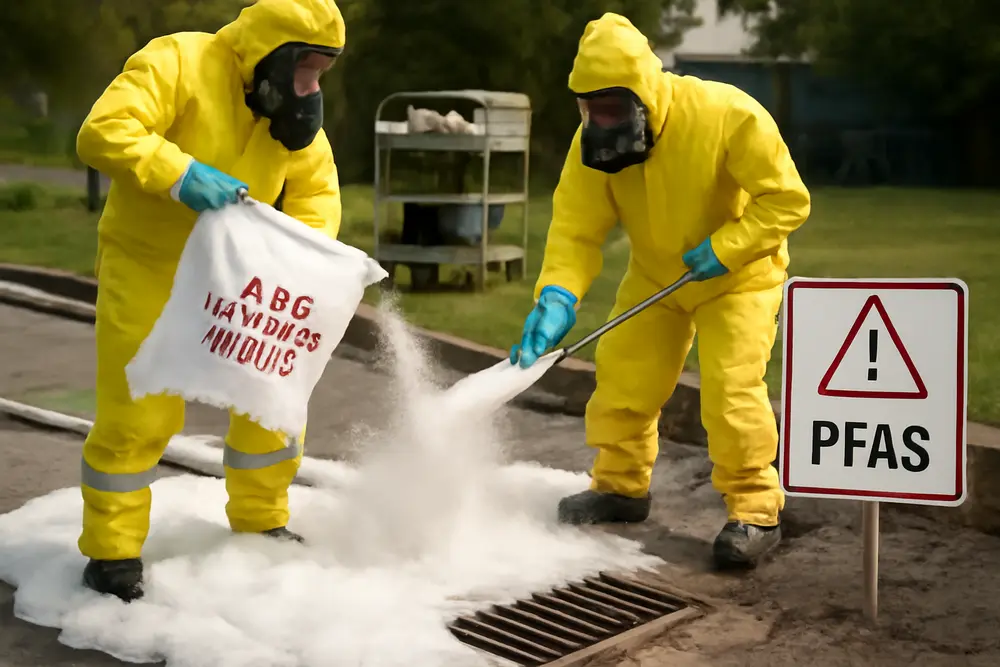
You put out a fire and now the place looks like a bakery sneezed. Maybe it’s yellow ABC dust on every shelf and circuit board. Maybe it’s a slippery Class K foam skating rink in your kitchen. Or, worst case, you’re staring at the sticky mess of a PFAS-laced Class B foam incident and wondering how to clean it up without turning your shop floor into hazardous-waste soup. Here’s my straight-shooting guide to fire extinguisher residue cleanup that protects electronics and HVAC, avoids corrosion and re-flash, and keeps you on the right side of disposal rules. I’ll give you field-tested steps, what to never do, and where to call for backup when the powder’s in the vents or the foam’s headed for a storm drain.
Why Cleanup Speed And Method Matter
Residue from ABC dry-chemical extinguishers isn’t just annoying dust. ABC powder, which contains monoammonium phosphate, can form phosphoric acid when combined with moisture. That means the longer it sits on metals, wiring, and circuit boards, the more corrosion you’re inviting. The powder is ultra-fine, so it settles into fans, keyboards, HVAC coils, and every crevice you forgot existed. Wet chemical Class K agents are alkaline and sticky, so they can etch finishes, keep floors slick, and trap moisture that breeds mold if you’re slow to rinse and dry. PFAS foams are another beast: if you let them reach soil, drains, or waterways, you’ve just turned a quick cleanup into a regulatory migraine. The right cleanup steps protect your gear and stop tomorrow’s problems before they start.
ABC Powder Decontamination
Let’s start with the yellow troublemaker. ABC dry-chemical powder is effective on solids, liquids, and electrical fires, but clean it wrong and you’ll damage the very stuff you just saved. ABC dust becomes corrosive when wet, so the first mistake is grabbing a mop and bucket. Don’t. Keep it dry at the start.
What ABC Powder Does To Surfaces
The chemistry matters. Monoammonium phosphate is slightly acidic when moisture activates it, which starts chewing on copper, aluminum, and steel. It can stain surfaces, pit metal, and degrade wiring insulation. That fine dust also rides air currents like a champ and will lodge itself inside electronics and ducts where you won’t see it until something fails. Clemson University’s cleanup fact sheet calls out this exact behavior and warns not to add water too soon for a reason. If you add water right away, you’re basically making corrosive paste.
Step-By-Step Dry Removal
Start with power and air. De-energize exposed electronics and shut down the HVAC so you’re not pushing powder deeper into the system. Gear up with gloves, goggles, and a P100 or N95 respirator. Then remove residue dry:
- Use a soft brush and a HEPA vacuum, not a shop vac. Brush gently to lift dust while the HEPA captures the fines.
- Work top-down, room by room, and don’t forget light fixtures, cabinet tops, and return vents.
- For keyboards, grills, and seams, use gentle compressed air and a HEPA vac nozzle side-by-side to capture what you dislodge.
Avoid any liquid on or near open electronics, circuit boards, or energized components. If residue is lodged inside complex equipment, stop and tag it for professional cleaning and inspection.
Neutralize And Rinse Without Wrecking Stuff
Once you’ve removed as much dust as possible, you can address residues on building materials and fixtures. For non-electrical hard surfaces that still test slightly acidic, make a mild baking soda solution in warm water, test on a small area, then wipe and rinse. For painted or delicate finishes, use a neutral cleaner and follow with a clean water rinse. Dry metals immediately to prevent flash rust. Use pH test strips on representative spots to confirm you’ve moved back toward neutral. If you see fresh rust or white bloom on aluminum or zinc, go back, re-clean, and dry again. On bare steel or copper, consider applying a corrosion inhibitor or protective coating if humidity is high.
Metals, Fabrics, Wood, And Masonry
Metals: get dry powder off quickly, then damp-wipe and dry at once. If the area was hot and humidity spikes, run dehumidifiers to keep corrosion in check. Fabrics: vacuum thoroughly using an upholstery tool. If stains remain, a gentle detergent wash may help. Avoid soaking dense upholstery without a plan to dry it fast. Wood: vacuum with a brush attachment in the grain direction. Avoid excessive water that can swell fibers. Masonry: after dry removal, a low-foaming neutral cleaner and rinse can lift embedment. Do not pressure-wash powder into cracks that lead to electrical chases or mechanicals.
When The HVAC Or Electronics Get Hit
HVAC units that ran during discharge usually need professional cleaning. That powder cakes on evaporator coils and hides in returns, bends, and filters. Replace filters, open up the air handler for HEPA vacuuming, and consider a negative-air duct cleaning with proper containment. For electronics, the rule is simple: if powder entered the case or vents, don’t power it up. Corrosion starts microscopic and ends expensive. Internal cleaning typically combines careful dry removal, ESD-safe brushing, and specialized solvents or deionized water followed by controlled drying. If that sounds like a lot, it is. Call a qualified electronics restorer.
PFAS Foam Cleanup
PFAS-containing foams like AFFF are persistent, mobile, and regulated in many jurisdictions. Cleanup is less about making it disappear and more about making sure it never touches soil or a drain. If foam has reached soil or drains already, stop activities and contact your state environmental agency for guidance. Michigan’s PFAS Action Response Team publishes best practices that basically boil down to containment, collection, and compliant disposal.
Containment Comes First
Kill flow to the area, block storm inlets with drain covers or inflatable plugs, and create berms with absorbent socks. Work on engineered surfaces whenever possible. If this is outdoors on uneven ground, lay down plastic sheeting to keep the foam and rinse water from infiltrating soil. If you’re inside, protect door thresholds and keep it out of floor drains unless you’ve set up a capture system. Everyone wears gloves, goggles, and waterproof protective gear because you’re handling waste that will need special disposal.
Collection Without Spreading The Mess
Use soft squeegees, wet vacs designed for chemical collection, and absorbent pads to pull foam and slurry toward a low point. Transfer to labeled, closed containers or totes. Avoid hosing anything to a drain. Keep different waste streams separate. The more you dilute and mix, the bigger and more expensive your waste profile gets.
Rinse Water Handling And Disposal
Rinse with the minimum amount of water required to remove slickness and visible residue, then collect every gallon. Multiple short rinses with recovery beat one long flush that escapes the scene. Disposal of PFAS foam and rinse water may require a licensed hazardous-waste hauler or state-approved facility. Expect notifications and paperwork. Many regions are transitioning away from PFAS foams toward fluorine-free foams, and some jurisdictions strictly limit training discharges. Check your state guidance and the latest federal updates before you even think about testing nozzles with legacy AFFF.
What About Electronics And HVAC?
PFAS foam can wick into filters and electronics and may leave surfactant residues. Treat impacted electronics like you would with ABC dust: keep them powered down, collect residues without driving liquid inside, and tag for professional cleaning if internal exposure is likely. Replace HVAC filters immediately, inspect coils and drain pans, and use HEPA and wet collection tools while keeping rinse water contained for disposal. If your air handler sits over a floor drain, isolate that drain and capture everything before it runs off.
Class K And Clean Agents
In commercial kitchens and food trucks, Class K wet chemical systems knock down cooking oil fires by saponifying the grease. Great for stopping a re-flash in a fryer, not so great for leaving behind a slick, alkaline film.
Wet Chem Residue Basics
Class K agents are typically potassium acetate or similar salts in water. They’re alkaline and can dull finishes, etch aluminum, and leave floors dangerously slippery. The agent sticks to surfaces and stays active until fully rinsed away. Treat it quickly, and you’ll avoid both corrosion and falls.
Cleanup And Slip Prevention
Secure gas and power to appliances. Let hot surfaces cool so you’re not creating steam burns. Start by absorbing pools and wiping up the bulk with disposable towels. Then wash affected surfaces with warm water and a neutral detergent, rinse, and repeat until no film remains. Some restorers follow with a mild white vinegar solution to neutralize residual alkalinity on non-sensitive metals and tiles, but always patch test. Dry stainless and aluminum surfaces right away to avoid etching or watermarks. Degrease hoods, rails, and backsplash seams where agent and fats mix. Replace hood filters if they were coated. For floors, rinse thoroughly and run air movers to get the space rental-ready fast.
Clean Agents Save Electronics
Where electronics rule the room, clean agents like CO2, inert gases, or halocarbon systems are the MVP for one reason: no residue. If you had a small discharge of a clean agent, your cleanup list is mostly inspection, ventilation, and a quick wipe of condensate or dust knocked loose by the discharge. This is exactly why server rooms, museums, and labs prefer them. They also reduce the chance of corrosion from residues that never land in the first place.
Do’s And Don’ts At A Glance
| Stage | ABC / Dry Chemical | PFAS Foam | Class K / Wet Chem |
|---|---|---|---|
| Immediate Actions | De-energize, shut HVAC, PPE, dry methods only | Block drains, berm, PPE, prevent runoff | Shut fuel and power, cool surfaces, PPE, stop slips |
| Bulk Removal | HEPA vacuum, soft brush, no water early | Squeegee, wet vac, absorbents to containers | Wipe, warm water wash, neutral detergent |
| Detail Cleaning | Neutralize light acidity, rinse, dry fast | Short controlled rinses, collect all water | Rinse fully, consider mild acid test-neutralize |
| Electronics & HVAC | Keep dry, external wipe only, pro internal clean | Replace filters, contain rinse, pro service as needed | Ensure no residue in vents, replace filters |
| Disposal | Check local regs for irritant waste | Likely hazardous streams, regulated handling | Usually normal sanitary disposal unless contaminated |
Preventing Corrosion And Reflash
Re-flash happens when heat, fuel, and oxygen cozy back up after you walk away. If residues are hiding oil or fuel under a thin film, that’s a risk. In kitchens, foam neutralizes hot oil, but leftover grease in seams can re-ignite when heat returns. Remove all residues, then remove the source of fuel and heat until inspection is done. Use thermal imaging if you have it to check for hot spots behind walls or in duct chases. Corrosion prevention is all about humidity and residues. Keep RH under 50 percent while you’re working, dry metals immediately after rinsing, and use pH strips to verify you’re not leaving acidic or alkaline films behind. For electronics, avoid powering up until a tech signs off. For bare metals, a light protective coating helps if the environment will stay humid for a few days.
Handling Electronics And HVAC
A handful of best practices saves thousands in repairs. For electronics that were exposed but not drenched, start with dry removal using ESD-safe brushes and a grounded HEPA vac. Tilt devices so gravity works for you, not against you. Don’t blow compressed air straight into a laptop vent without extraction right next to it. That just relocates powder deeper inside the device. If residue is internal, tag and bag for professional service. The right cleaning typically involves controlled solvents or deionized water, plus multi-stage drying under low humidity. Rushing power-ups to see if it still works is how you convert recoverable boards into toast.
HVAC systems amplify tiny problems. Powder sitting on an evaporator coil is corrosive and reduces heat exchange. Foam and wet agents in drain pans can slime up and overflow. Replace filters, inspect coils, and clean returns with HEPA equipment. If discharge occurred while the fan ran, call a duct-cleaning pro who can set up negative air, sectional access, and proper capture. If your building took smoke too, it’s a great time to bring in a fire restoration team that can tackle both residue and odor in one pass. We routinely combine residue removal with deodorization and post-clean humidity control to stop corrosion creep. See our overview of the process on our Fire Damage Restoration page and our checklist for hidden issues on Assessing Fire Damage.
Disposal Rules And Who To Call
With ABC powder, many jurisdictions treat recovered solids and rinse water as non-hazardous irritant waste, but it depends on what it mixed with on the floor. If the area had chemicals or oils, your waste stream just leveled up. Always check local rules. With PFAS foams like legacy AFFF, assume regulated handling. You’ll need to capture all liquids and coordinate with your state environmental agency and a licensed waste hauler. Some states publish best management practices that spell out containment and disposal in plain English. Michigan’s guidance for fire stations is a good model and worth a read even if you’re not in the Great Lakes region. Your facility insurance or EHS lead might also have pre-arranged contracts for hazardous-waste events. Use them.
As for future incidents, many sectors are phasing out AFFF in favor of fluorine-free foams. If you’re in aviation or industrial response, check the latest federal and state rules on foam selection and testing. Transitioning to foam that doesn’t create a disposal headache is a smart move that pays off the next time a spill becomes a flame.
Real-World Scenarios
Example 1: The toaster fire that became a laptop funeral. ABC extinguisher dust floated across an open-plan office and settled in dozens of laptops and a rack-mounted switch. The company wiped visible dust with wet wipes, then powered everything back up. Within a week, multiple machines failed as corrosion completed its slow work. What should’ve happened: dry removal with HEPA and ESD-safe brushing, no wet wipes on devices, and professional internal cleaning for anything with powder inside. A fraction of the hardware would’ve needed replacement and the network switch would’ve survived.
Example 2: The fryer flare-up with a slip-and-fall sequel. A small Class K discharge knocked down a fryer fire in a food hall. Staff hosed the area down and reopened in an hour. The hood baffles and tile seams still had agent and grease, and a worker slipped that afternoon. Better plan: wipe bulk residue first, warm detergent wash, thorough rinse, test for slickness, then dry with air movers. Replace hood filters, inspect gutters and seams, and document cleaning before re-energizing equipment.
Example 3: The PFAS parking-lot oops. A training release of legacy AFFF on asphalt rolled to a storm inlet. The fix required reporting, inlet capture, and vacuum extraction of a long stretch of storm line. If they had plugged the inlet and staged berms and absorbents before the nozzle came out, collection would’ve been a few drums instead of a municipal headache. Prevention and containment are cheaper than after-the-fact heroics, every time.
How To Choose Cleanup Products
Skip mystery miracle sprays. For ABC powder, stick to HEPA vacuums, neutral cleaners, clean water, and baking soda solutions for light acidity where safe. For Class K residues, use warm water, neutral detergents, and a carefully tested mild acid solution only if needed on non-sensitive surfaces. For PFAS foam incidents, the product is less about a surfactant and more about containment materials: drain covers, absorbent socks, and compatible wet vacs with closed containers. Whatever you use, read the SDS and make sure it’s compatible with metals and finishes you’re cleaning.
When To Call Professionals
Call in a restoration team when any of the following happens: powder enters vents or sensitive electronics, PFAS foam threatens a drain or soil, you’re dealing with a commercial kitchen hood and fryer system, or there’s visible corrosion starting on metals. We bring HEPA equipment, negative-air duct setups, pH testing, corrosion inhibitors, electronics restoration partners, and the right disposal pathways. If you’re trying to protect expensive gear, the cost of doing it right is less than one server replacement. For tips on protecting tech around moisture and residues, see our piece on Protecting Home Electronics.
Fire Extinguisher Residue FAQ
Is ABC Powder Toxic?
It’s an irritant, not typically acutely toxic, but it can inflame lungs, eyes, and skin. The bigger issue is corrosivity when it gets damp. Wear PPE, keep it dry initially, and clean it up quickly.
Can I Just Hose Down PFAS Foam?
No. Do not wash it into drains or soil. Contain it, collect it, and coordinate regulated disposal. Many states have guidance for AFFF incidents and training events. Hoses without capture make problems much worse.
Will A Clean Agent Leave Residue?
Generally no. CO2, inert gases, and halocarbons do not leave residue under normal conditions. You may need ventilation and a quick wipe, but they’re the friendliest option for electronics.
How Fast Does Corrosion Start After ABC Powder?
Fast. Once humidity interacts with residues, micro-corrosion gets to work. That’s why swift, dry removal and immediate drying after any damp wiping is so critical, especially on copper and aluminum.
Do I Need To Replace HVAC Filters After Any Discharge?
Yes. Replace impacted filters right away, and inspect coils and pans. If the system ran during discharge, plan for professional duct cleaning with proper capture.
Can I Neutralize Class K Residue With Vinegar?
A mild white vinegar solution can help with residual alkalinity on hard, non-sensitive surfaces, but always patch test and rinse thoroughly. Some finishes and metals don’t love acids.
Source Notes
If you like receipts, here are a few good reads on the why behind this guide: Clemson University’s Class ABC residue cleanup fact sheet explains why ABC powder gets more corrosive when wet. Michigan’s PFAS Action Response Team outlines best practices for containing and disposing of PFAS foam and rinse water. Several fire protection pros have published reminders that dry chemical and electronics do not play nice together, and why dry-first removal and professional service matter for anything with vents and fans. For facilities planning future suppression choices, industry and agency updates detail the shift toward fluorine-free foams and where clean agents shine around sensitive equipment.
Helpful links: