
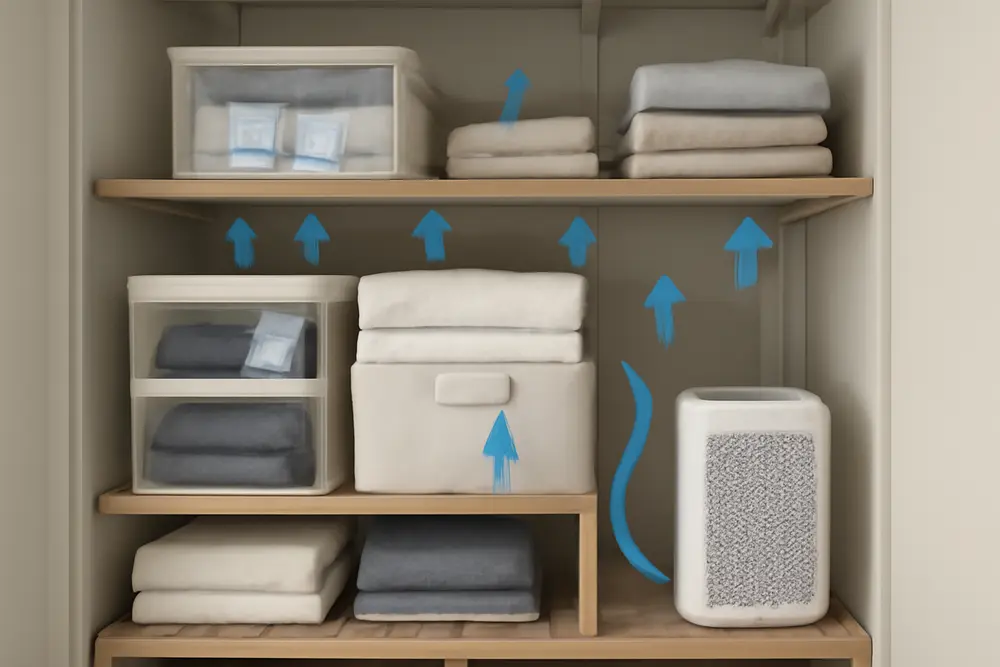
If your closet smells like a wet dog wearing grandma’s perfume, you’ve got a ventilation and storage problem. Closets are small, dark, and crammed with moisture-loving fabrics. Close the door and you’ve basically built a tiny sauna for mold. The fix is not a mystery. Give the space a way to breathe, keep the humidity honest, and store your textiles bone-dry. This quick guide walks you through practical closet ventilation tweaks, humidity control that actually works, and smart dry textile storage so your sweaters stop smelling like last year’s basement.
Why Closet Ventilation Matters
Closets are the home’s microclimate troublemakers. The walls are often exterior or shared with bathrooms, the door stays shut, and the space is packed with fabric that traps moisture. Relative humidity climbs fast in still air, and mold likes anything above 60 percent. That number is not random. It’s the threshold repeatedly flagged in restoration work and homeowner guides as the point where dormant spores start acting like they pay rent. Keep your closet’s relative humidity below 60 percent and you cut mold’s legs out from under it. Better yet, aim for 40 to 50 percent if your home and climate allow. Stagnant air is the real villain here, because moisture has nowhere to go. Air needs a path in and out, or the closet becomes a moisture jar with hangers.
Musty odor is the yellow warning light on your dashboard. By the time you smell it, you likely have a mix of trapped humidity, dust, skin oils, and a healthy colony of microbes having a house party in fabric fibers or on the backside of shelving. That odor does not come from nowhere. Fix airflow and humidity and you cut off the food supply. If you want a deeper read on how humidity fuels mold growth, check out our post on indoor humidity targets and how they influence mold growth at Mold And Humidity.
Airflow Fixes For Closets
Ventilation for closets is not glamorous, but it is effective. Start with the door. A solid slab door is a brick wall to airflow. Louvered doors let air move while still hiding the mess. If you like your current door, add a transfer grille or install discrete closet vents up high and down low to create a stack effect inside the space. That top-and-bottom combo helps warm moist air rise out while cooler air slips in.
The unsung hero is the door undercut. Trimming the bottom of the door by roughly 1/2 inch to 3/4 inch creates a return-air path so conditioned room air can actually sweep through the closet. Without that gap, your HVAC can push air toward the closet, but nothing pulls it back out. If you have a supply register inside a walk-in, that undercut or a dedicated transfer grille is non-negotiable. No airflow path means the register just pressurizes a dead-end box.
Spacing matters too. Cramming hangers shoulder-to-shoulder is a moisture trap. Give garments an inch between hangers and keep a couple of inches off the back wall. If your closet backs up to an exterior wall, leave more space. Those surfaces can run cooler, and cool surfaces are where moisture condenses first. Pull bins off the floor on low shelves or risers so air can move under and around them. If you can handle the look, keeping the door cracked when you shower or run the dishwasher helps purge moist air that tries to collect in closets nearby.
If you want to get fancy, low-watt circulation fans made for cabinets can help in larger walk-ins, but only if you also give the air a way to exit. A fan that spins in a sealed box just pushes stale air in circles. For HVAC-specific airflow tips and why balanced supply-and-return paths matter, see our notes on duct and vent strategy at Mold In HVAC Systems.
Quick code sanity check: if your closet is part of a fire-rated separation, like between a garage and living space, do not hack holes or swap doors without confirming you are not violating a fire barrier. In a typical bedroom closet, though, these airflow tweaks are fair game and highly effective.
Humidity Control That Actually Works
Ventilation handles the movement of air. Humidity control manages the moisture in it. You want both. Start with a small digital hygrometer inside the closet. They are cheap, and they tell you if your closet is actually humid or just stuffy. If you see readings spiking above 60 percent, take action. If you live in a humid climate, set a home dehumidifier to keep the surrounding room in the 40 to 50 percent zone. Your closet will follow suit if it has airflow. Running a dehumidifier inside a tiny reach-in is usually a bad idea because of heat and noise, but it can be smart in a big walk-in with a drain line and a transfer grille.
Moisture absorbers are the backup singers. Silica gel packets and canisters are tidy and reusable. Activated charcoal helps with odor and minor moisture. Calcium chloride buckets pull a lot of water fast but can leak brine if they tip, so keep them in a secondary tray and away from fabrics and metal hardware. Place absorbers on shelves or inside bins, not sitting against walls where they collect condensation and damage paint or plaster. Check and recharge them on a schedule instead of waiting for the smell to tell you they died three months ago.
Your home’s HVAC can also help if you let it. Keep bathroom exhaust fans running for 15 to 20 minutes after showers. That steam has to go somewhere, and too often it goes straight into adjacent closets. If your HVAC has a continuous low-speed fan option, test whether it reduces closet humidity. Some homes benefit, some get higher humidity when the fan recirculates air during shoulder seasons. The hygrometer will tell you which camp you’re in. Again, we break down humidity strategy and why 60 percent is a line in the sand in our Mold And Humidity guide.
| Moisture Tool | Best Use | How To Deploy | Watchouts |
|---|---|---|---|
| Silica Gel | Bins, drawers, shoe boxes | 1 packet per 5 to 10 liters of volume, recharge in oven if reusable | Replace or recharge often, does not fix high RH alone |
| Activated Charcoal | Odor control plus light moisture | Sachets on shelves or in garment bags | Messy if spilled, modest moisture capacity |
| Calcium Chloride | High humidity or damp basements | Bucket on tray away from textiles | Corrosive brine if tipped, keep away from metals |
| Room Dehumidifier | Rooms feeding walk-ins | Set to 45 to 50 percent RH with continuous drain | Heat output, regular maintenance required |
Dry Textile Storage That Stops Mildew
Dry Textile Storage is not a cute phrase. It is the line between fresh wool and a science experiment. Never store anything that is even slightly damp. Not collars, not cuffs, not inseams, not waistbands. Thick seams and elastic waistbands hang onto moisture longer than the main fabric, and that little pocket of damp is all mildew needs. If you line-dry, let items hang overnight after they feel dry to the touch. If you machine-dry, let clothes cool before you seal them in a bin so residual heat does not create condensation inside.
Always clean before long-term storage. Body oils and food residue feed mold and invite pests. Skip starch for storage. It can make fabrics more appealing to insects. For knits and heavy items, fold instead of hanging to prevent shoulder bumps and stretching. Place heavier pieces on the bottom of stacks and rotate what is on top every few months so the same folds are not under pressure for a full season.
Use breathable storage whenever you can. Muslin or cotton garment bags let air move and keep dust off. Dry cleaner plastic is a no-go for storage because it traps moisture. For bins, choose sturdy plastic with small vent features or open a corner slightly so air can exchange with the closet. Cardboard boxes are problematic since they absorb moisture and can transfer acids to fabrics over time. If you are storing heirlooms, line with acid-free tissue and wrap items individually. Parks and museum pros do this for a reason, and it absolutely translates to home closets.
Control microclimates inside containers. Slip a silica canister or two into each bin and toss a small hygrometer in a couple of them. If you note 50 to 55 percent RH inside and steady, you are golden. If it creeps up, swap or recharge the desiccants. Cedar blocks and lavender sachets pull double duty by discouraging insects and adding light scent. Cedar needs refreshing with a quick sanding once or twice a year. Do not let oils from cedar touch delicate fabrics directly since they can cause discoloration.
Shoes and bags deserve their own plan. Clean and dry them thoroughly, stuff bags with acid-free tissue to hold shape, and add a small desiccant sachet inside each bag and boot. Leather should be cleaned and conditioned before storage and kept in breathable dust bags. Never seal leather in airtight plastic. You will get condensation and a smell that can take professional treatment to remove.
Give your textiles breathing room. On a standard closet rod, aim for at least an inch between hangers. Wood or flocked hangers create space and grip fabrics without creasing. Keep at least 2 inches between hanging items and the back wall, especially on exterior walls. Elevate bins an inch or two above the floor on slats or low shelves to prevent cold floor contact and allow airflow. If your closet sits over a crawlspace or slab, that small gap helps break the cold-bridge that drives condensation in shoulder seasons.
If you want additional reading on breathable storage and desiccant choices, you can find solid basics on fabric-friendly storage from sources like OutfitEn and HowToStoreThings. The punchline is always the same. Store dry, let air move, and monitor humidity instead of guessing.
Already Smelling Musty?
Pull everything out. You cannot fix what you cannot reach. Wash what is washable using a quality detergent and the warmest water that is safe for the fabric. If odor lingers, run a second cycle with a cup of white vinegar or use oxygen-based bleach that is color-safe. That oxidizer is particularly good at breaking down the compounds that make mildew stink. Dry completely before you even think about putting anything back.
For non-washables, consider professional cleaning. At home, you can air textiles outdoors in indirect sunlight for an hour or two. UV light helps, but so does fresh airflow. Do not bake colors in direct sun because fading is real. For leather and delicate items, avoid DIY odor bombs. Ozone generators sold for home use can be unsafe and can damage textiles and rubber. Skip them.
Now clean the closet itself. Vacuum shelves, corners, and the ceiling with a HEPA vacuum and a soft brush. Wipe hard surfaces with a mild detergent solution first, then follow with plain white vinegar or 3 percent hydrogen peroxide if needed. Test small areas and do not mix chemicals. Let surfaces dry completely with the door open and a fan running in the room.
Look for root causes. Is there a bathroom sharing a wall that is throwing steam at your closet? Is there a supply vent with no return path? Is the closet on an exterior wall where cold weather drives condensation? Are you seeing water stains or swollen trim that hints at a roof or plumbing leak? If you find visible mold on drywall larger than a poster, or if you suspect a leak inside a wall, stop and call a qualified remediation team. You do not want to tear into that without containment and the right gear. If you are in our service area, we can inspect, test, and fix what is actually driving the growth.
Simple Setup Plans
Small Reach-In Closet: Swap to a louvered door or add a short undercut and a transfer grille up high. Place a small hygrometer on the top shelf, a couple of silica canisters in bins, and give hangers space to breathe. If the room is humid, run a compact room dehumidifier outside the closet. Keep the closet door cracked after showers or laundry cycles. Clean shelves seasonally and rotate stacked items to loosen long-term folds.
Walk-In Primary Closet: Verify you have either a return duct or a clear return path via door undercut. If a supply register is inside, the undercut should be obvious. Install a low-profile transfer grille to a hallway if you need more return path. Add a top-and-bottom passive vent within the closet for circulation. Set a digital hygrometer where you can see it daily. Use breathable garment bags for suits and dresses, and store seasonal knits folded with cedar blocks and silica in bins. If RH pushes above 55 percent often, add a small dehumidifier with a drain to a nearby bath or laundry sink and set it to 45 to 50 percent.
Basement Storage Closet: This is mold’s playground, so go heavy on control. Do not store textiles directly against concrete or exterior walls. Use shelving that sits a couple of inches off the wall and at least 4 inches off the floor. Choose vented plastic bins, each with silica gel canisters and a bin hygrometer. Seal any foundation cracks that weep. Run a basement dehumidifier set to 45 to 50 percent and make sure it drains automatically. Consider a louvered or vented door and a fan in the adjacent room to keep air moving past the closet opening. Inspect monthly, not yearly, and swap desiccants on a schedule.
Frequently Asked Questions
How low should closet humidity be?
Target 40 to 50 percent relative humidity in the closet and surrounding room. Above 60 percent and you are in the mold comfort zone. A cheap hygrometer tells you where you stand.
Do louvered doors really help?
Yes. Louvers are simple airflow insurance. They let conditioned air enter and stale, humid air exit even when the door is closed. Pair them with a small door undercut for a complete airflow path.
Can I just use scented sachets to fix musty smells?
No. Covering odor is not control. You need airflow and humidity control first. Sachets and cedar are the finishing touch once the space is dry and ventilated.
Is a dehumidifier inside the closet a good idea?
In a small reach-in, usually not. They add heat and take up space. Control room humidity and add airflow to the closet instead. In a large walk-in, a small unit with a drain and a return-air path can be effective.
Are plastic bins bad for clothes?
Not if you use them smartly. Choose bins that are not fully airtight, add silica gel, and make sure items are fully dry. Avoid storing bins directly on cold floors or tight against cold walls.
What desiccant should I use for clothes?
Silica gel is clean and reusable. Use more in bigger bins. Activated charcoal helps with odor. Calcium chloride is powerful in damp areas but keep it away from fabrics and metals, and always set it in a secondary tray.
When should I call a professional?
If you see visible mold larger than about 10 square feet, if odor returns quickly after cleaning, or if you suspect a hidden leak. Professionals can find moisture sources, set containment, and remediate safely.
Pro Help When You Need It
If your closet keeps smelling like a middle school locker no matter what you try, there is usually a moisture source or airflow flaw hiding in plain sight. Our team can track down leaks, fix airflow bottlenecks, and remediate mold the right way so you are not just spraying fragrance on a biology problem. For humidity targets and strategies that work across your whole home, start with our Mold And Humidity guide. If you suspect the HVAC setup is feeding your closet problems, see our Mold In HVAC Systems tips. When you are ready for an inspection or you want us to set up a closet that does not grow science projects, reach out and we will get you the airflow, humidity control, and Dry Textile Storage plan that fits your space.