
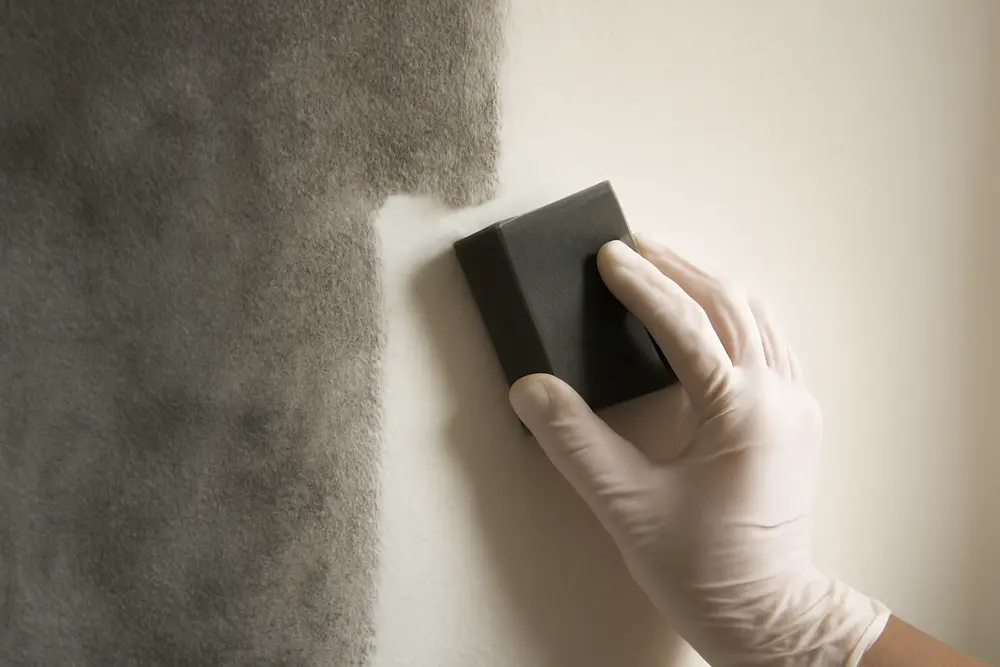
You survived the flames, but now your ceiling looks like Halloween threw a tantrum in July. Those creepy black cobweb lookalikes are not spiders gone emo. They’re soot tags, and if you attack them with water and a rag, you’ll trade spooky for smeary in under ten seconds. Here’s what those tags really are, why DIY tends to make a bigger mess, and how restoration pros knock them out using containment, HEPA air control, chemical sponge cleaning, and sealing so the stains and stink do not keep coming back.
What Are Soot Tags?
Soot tags are chain-like clumps of oily smoke residue that collect in cooler, low-airflow areas after a fire. They love corners, ceiling junctions, behind doors, above crown molding, and the high parts of stairwells. Unlike dry, powdery soot that brushes away easily, soot tags are loaded with sticky, oily compounds from burned plastics, wiring, foams, and synthetic finishes. That oily profile is why they smear the second you add moisture.
The science-y short version: during and after a fire, heat drives smoke to cooler surfaces, and air currents swirl around corners and high points. Particles cling and chain together into long, web-like strands. Real cobwebs are fragile and dusty. Soot tags are heavier, streaky, and they feel greasy to the touch. Knock one with a damp rag and you do not remove it. You paint with it.
Why DIY Cleaning Fails
Most homeowners instinctively grab soap and water. That is the smoke cleanup equivalent of buttering a black crayon and rubbing it into your paint. Wetting oily soot glues it into porous surfaces like flat paint, drywall, and raw wood. You do not lift the stain. You grind it deeper. And because soot particles are super fine, just walking through the space, turning on a fan, or running the HVAC can track them into rooms that never saw a flame. Next thing you know, your guest room smells like a barbecue pit and your beige walls have gray fingerprints in random places.
There is also a health angle. Smoke particles can irritate your lungs and eyes, and certain residues from plastics and treated materials can be more than just unpleasant. If you are going to be in the space, wear at least an N95 or better, gloves, and eye protection, and resist the urge to stir up dust. The less you move soot around, the better your final results will be.
| First Moves That Help | Moves That Make It Worse |
|---|---|
| Turn off HVAC and tape over vents in affected rooms | Run the furnace or AC before cleaning |
| Limit foot traffic and close doors to clean rooms | Walk through with damp rags or mops |
| Use HEPA air filtration if you have it | Use a standard vacuum without a HEPA filter |
| Call a pro for an assessment | Paint over tags without cleaning |
How Pros Remove Them
Restoration companies do not guess their way through soot tags. We follow a workflow designed to stop spread, pull loose particles, lift residues without smearing, then wash, deodorize, and seal what is left. When our team rolls up, here is how the operation actually works.
Inspection And Containment
We start with a full walkthrough to find every area of smoke impact, which kind of soot is present, and what can be saved. Then we isolate the affected zones with plastic barriers and zipper doors, protect flooring, and shut down or filter the HVAC. We set negative air pressure with HEPA air scrubbers so fine particles are constantly captured instead of migrating to clean rooms. No one likes a smoky surprise in the linen closet next week.
HEPA Vacuuming
Next, we use HEPA vacuums to remove dry, loose particles before touching anything with a sponge or cleaner. That might include ceilings, walls, trim, and the tops of cabinets and door frames. We work top to bottom, often with soft-bristle or brushless attachments so we do not scuff finishes. We also keep HEPA air scrubbers running during cleaning to capture what gets lifted into the air. Think of it as controlling the fallout while the cleanup is underway.
Chemical Sponge Cleaning
This is the star of the show for soot tags. Chemical sponge cleaning uses a vulcanized rubber sponge with a porous, eraser-like texture. It is used completely dry, which is the secret sauce. Moisture would smear oily soot. The dry sponge grabs and lifts residue off the surface instead of dissolving it.
Technique matters. We pull the sponge across a small area in one direction with light pressure. No scrubbing back and forth. We rotate the sponge as it loads up, then slice off the contaminated layer with a utility knife to expose clean rubber. For ceilings and vertical surfaces, this removes a shocking amount of residue quickly. On soot tags in corners and high junctions, the sponge breaks the chain and lifts the residue without smearing those iconic black squiggles across your paint.
A few rules we live by:
- Never wet the sponge. Water ruins its lifting ability and turns cleanup into smear city.
- Work from clean to dirty, top to bottom, and do not skip corners and returns where tags like to hide.
- Change sponges regularly. They are consumables, not heirlooms.
Detergent Or Solvent Pass
Once we have removed as much residue as possible with chemical sponge cleaning, then we bring in liquids. The cleaner depends on the soot type. Oily synthetic soot may respond best to a carefully selected solvent or degreaser. Protein soot, like from a kitchen fire, often needs alkaline cleaners or enzymatic products. We test in discreet areas, apply with controlled dwell times, and then remove with clean pads. The goal is to break down the stain film without driving it deeper into paint or plaster.
Odor Removal
Odor comes from microscopic residues still clinging to surfaces and hiding in pores. After physical cleaning, we use one or a combination of these methods to neutralize it:
Ozone treatment in unoccupied spaces to oxidize smoke odor molecules. Doors stay closed, and re-entry timing is controlled. Thermal fogging that mimics the travel path of smoke with a deodorizing fog so it reaches the same nooks and crannies. Hydroxyl generators that process air and surfaces with oxidizing radicals and can often run while the space is occupied under the right controls. We also continue HEPA air filtration and targeted ventilation to clear out anything left hanging in the air.
Sealing And Repaint Prep
Some porous surfaces hold a shadow of smoke staining that will ghost back through fresh paint if you do not lock it down. We apply odor-blocking primers or sealers that encapsulate residual staining and odor. Only after sealing do we move to finishing coats. This step is the difference between walls that stay clean and walls that slowly grow yellow-brown halos after you thought you were done.
Why Chemical Sponges Win
Plenty of people ask why we do not just start with a wet wash. Because chemical sponge cleaning gives you control. It removes the bulk of the contaminant without forcing it deeper into the surface. That means less scrubbing, less abrasion, and fewer repaints. On flat paint and textured ceilings, the sponge grabs residue from the high and low spots. On glossy trim, it keeps the soot from smearing into long black streaks that would otherwise require aggressive solvents and risk finish damage.
It also saves time. Every pass with a dry sponge is a pass you do not spend re-washing a smeared mess. That efficiency adds up across ceilings, corners, door casings, and entire hallways of tags. When you hit the wet-cleaning stage, there is far less residue to break down, so products work faster and rinse cleaner. Translation: better results with less wear and tear on your finishes and your nerves.
When Should You Call Pros?
There is a difference between a candle mishap and a room that went gray after an electrical short. If you see soot tags in multiple rooms, if there is persistent smoke odor, or if your HVAC pulled smoke into vents and returns, call a certified restoration crew. If anyone in your home has asthma or respiratory sensitivities, do not wait. Professional containment, HEPA filtration, chemical sponge cleaning, and sealing are not just fancy checkboxes. They prevent spread, protect indoor air quality, and preserve salvageable finishes. We are ready 24-7 because smoke does not care about business hours.
Aftercare And Prevention
Once the soot tags are gone and the odors are handled, a few habits keep things from creeping back. Change HVAC filters more often for the first few months and consider upgrading to a higher MERV rating your system can handle. If your ducts took a hit during the event, get them cleaned professionally. Keep humidity in check around 35 to 50 percent with ventilation or dehumidification so odors do not cling as much. Launder or dry clean textiles that were in the affected areas, including curtains and bedding. And if you are a candle or fireplace fan, keep wicks trimmed and ventilation open so you are not making new soot films that set the stage for ghosting on cold walls.
Mistakes That Cost You
Here is how soot jobs grow from a quick cleanup to a repaint marathon. Rubbing walls with wet rags before lifting soot with a chemical sponge creates permanent smears. Running a non-HEPA vacuum blasts fine particles out the exhaust into every clean room. Hitting soot-stained walls with steam drives residues deeper and can soften paint. Painting over uncleaned soot traps odor and creates stain bleed that laughs at your primer. Spraying air freshener to mask smoke odor just perfumes the problem. If you are not using containment and HEPA air control, you are basically chaperoning soot on a house tour.
FAQ
Are Soot Tags Actually Cobwebs?
No. They look like cobwebs because soot particles chain together in long strands, especially in corners and cool zones. Real cobwebs are dusty and brittle. Soot tags are sticky, darker, and they smear when touched.
Will Vinegar Or A Magic Eraser Fix Soot Tags?
Not as a first step. Liquids smear oily soot, and melamine pads can abrade paint without removing the residue. The correct sequence starts with chemical sponge cleaning to lift soot dry. Liquids come later, and only after testing for the right cleaner on the right surface.
Is Chemical Sponge Cleaning Safe For Flat Paint?
Yes, if you use light, single-direction strokes. The sponge is designed to pick up soot without moisture, which is exactly what flat and matte paints need. It is also effective on textured ceilings where wiping would just drive soot into the texture pits.
Can I Turn The HVAC Back On After A Fire?
Not until a pro checks it. Running the system can distribute soot and odor throughout the home. We typically keep systems off until affected rooms are contained, then add filtration or clean the ducts as needed before restart.
Do I Need To Replace Insulation If There Were Soot Tags?
If smoke entered wall or attic cavities, insulation can hold odor and particulates. Sometimes it can be deodorized, but often removing and replacing affected sections is the better call. An inspection tells you which way to go.
How Long Does Odor Removal Take?
It depends on how widespread the smoke was and what burned. Light tagging in one room may be handled in a day or two. Whole-home smoke with heavy synthetic soot and porous surfaces can take several days of cleaning, deodorizing, and airing out.
Does Insurance Cover Soot Tag Cleanup?
Many homeowners policies cover smoke and soot cleanup after a covered fire loss. Document everything, including photos of soot tags, affected rooms, and any personal items. We work with adjusters all the time and can help map the scope to the policy.
How We Tackle Soot Tags
We treat soot tags as a containment-and-control mission. First we isolate the zone and get HEPA air control running. Next we use HEPA vacuums on loose debris, then chemical sponge cleaning to lift the oily residue without smearing it. After that, we deploy targeted cleaners that match the soot type. Odor control follows with ventilation, ozone or hydroxyl as needed, and possibly thermal fogging to chase odor where smoke traveled. If staining or odor wants to linger, we seal those surfaces with the right primer so the finish holds. That recipe clears the black webs and the stink, not just for the day, but for the long run.
What You Can Expect
Expect a methodical process. Expect lots of clean white sponges turned charcoal in minutes. Expect plastic barriers, humming HEPA scrubbers, and techs who measure twice and clean once. Expect straight talk about what is salvageable and what needs to be replaced. And expect the space to look and smell normal again, without the telltale gray shadows that come back to haunt freshly painted walls.
Ready For Clean Walls Again?
If your corners are sprouting black streamers, do not water-smear them into permanent murals. Soot tags respond to the right steps in the right order. That starts with containment and HEPA, continues with chemical sponge cleaning, and finishes with smart washing, deodorizing, and sealing. If you want it handled fast and handled right, bring in a team that does this every day. We are on call around the clock and we bring the sponges.