
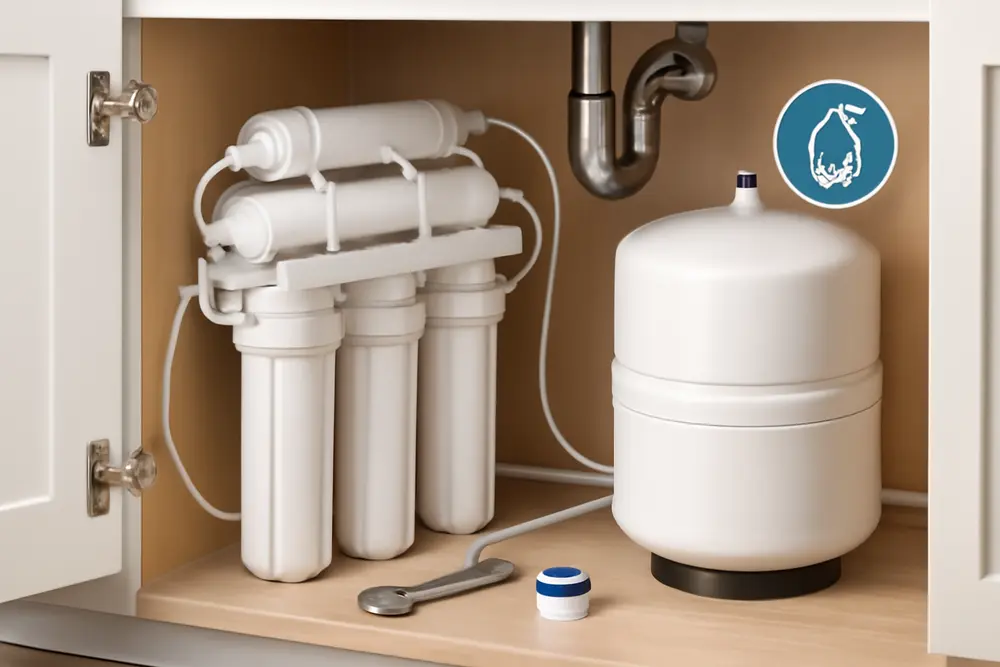
If you have an under-sink reverse osmosis system quietly doing its thing, you’ve also got a sneaky leak risk stalking your cabinets and floors. We see it all the time on restoration jobs: a tiny drip from a loose push-connector or a crusty saddle valve slowly chews up particleboard, swells door panels, and wakes up mold spores like they just got front-row tickets to a humidifier convention. The fix is not complicated. Under-sink reverse osmosis leak prevention is about a handful of setup choices, a few smart gadgets, and a short maintenance routine. Do it right and you’ll protect your cabinets, your subfloor, and your sanity.
Why RO Systems Leak In The First Place
Under-sink RO rigs are great at filtering water and terrible at forgiving sloppy installs. The usual suspects are predictable. Tubing that wasn’t cut squarely never seats right in quick-connect fittings. Cheap or worn O-rings go flat and let a slow weep sneak past. Tubing kinks create back-pressure and stress fittings until they throw in the towel. Saddle valves pierce supply lines and then corrode, clog, or start seeping because the soft rubber seal gave up. Housings crack from over-tightening. And drain saddles get slapped onto the wrong pipe, right after the disposal, so food slurry backs up and burps onto your cabinet base. Add high water pressure or water hammer to the mix and you’ve got prime conditions for a stealth leak to turn your sink base into a science experiment.
Secure Tubing Like You Mean It
If tubing and fittings are the arteries and veins of your system, then your cutting tool is the scalpel. Use a proper tubing cutter and make clean, square cuts. If the cut is angled or burred, the O-ring in a quick-connect can’t seal evenly. Brands like John Guest and Mur-Lok make push-in fittings with quality O-rings and positive engagement that click in and hold. If you prefer compression fittings, use internal stiffener sleeves so the tubing doesn’t collapse around the ferrule when you tighten.
Route lines with gentle bends, not tight kinks. Secure them along the cabinet wall with adhesive clips so they aren’t dangling, snagging, or acting like little jump ropes every time you pull out the trash bin. If your tank line is long, support it so weight is not stressing the elbow at the tank valve. Keep tubing off sharp edges and away from the underside of the sink where vibrations can chafe the line. And before you call it a day, tug-test every push-connection. If it slips out with a light pull, it wasn’t seated. Push it in again until you feel the shoulder hit home, then pull gently to confirm it locked.
Ditch Saddle Valves Before They Ditch You
Saddle valves are the fast-food of plumbing. They clamp onto a copper line, pierce it, and pretend to be a shutoff. They also clog with mineral, leak at the rubber seal, and are often not allowed by modern plumbing codes. If you already have one feeding your RO system, count those drips as a warning.
Use saddle valve alternatives that make a proper connection. A dedicated feed valve installed on the cold-water line gives you a real shutoff and a reliable threaded port for your 1/4-inch tubing. Many homeowners go with a tee fitting and a small quarter-turn valve sized for 3/8 or 1/2 supply lines. Where a diverter feed makes sense, something like the Under Sink RO Diverter Feed Water Valve from Bluonics provides a clean adapter with a 1/4-inch outlet and keeps your supply line intact instead of pierced. Check it out here: Bluonics Diverter Feed Valve. For install guidance, this resource outlines proper RO feed connections and why you should skip piercing saddles: Reverse Osmosis Installation Basics.
Leak Sensors And Shutoffs That Actually Work
Here’s where under-sink reverse osmosis leak prevention gets satisfying. Install a mechanical leak-stop valve. Devices like the iSpring ALS1 and APEC Leak Detector use a small absorbent pad. If water touches it, the pad swells and mechanically closes the valve. No batteries, no Wi-Fi, just water-activated physics that shuts the feed line. They’re cheap insurance that turns a slip into a minor inconvenience instead of a cabinet rebuild. See examples here: iSpring ALS1 Leak Detector and APEC Leak Detector.
For the RO process itself, most systems include an auto shut-off valve that stops production when the tank is full. If yours doesn’t or it’s flaky, add a reliable one like the Vertex Auto Shut-Off Valve. It uses quick-connect ports and requires no power: Vertex ASO Valve. A properly working ASO saves water and reduces stress on fittings by preventing constant flow and pressure fluctuations.
Drip Trays And Catch Pans Keep Cabinets Dry
Containment matters. A simple under-sink drip tray or thin catch pan buys you time. If a fitting starts weeping or the drain saddle sweats condensation, the tray holds it instead of letting particleboard puff up like a croissant. Place a leak-sensor pad or a mechanical leak-stop in the tray so the first drop that lands there shuts the party down. You can go basic plastic, or a metal pan with a lip. The goal is time: time to notice, time to shut off, time to fix, and zero time for mold to settle in.
Pressure And Drain Line Basics
Most residential RO systems want inlet pressure in the 40 to 80 psi range. If you’re above that, install a pressure regulator on the cold feed line. High pressure can force past O-rings, fatigue housings, and turn tiny imperfections into actual leaks. If you get loud pipe bangs when other fixtures close, that’s water hammer. Add a small water hammer arrestor on the cold line to the sink to protect fittings and valves.
Inside the RO system, a check valve and an auto shut-off valve keep production tidy. If the tank is full and you still hear water running to the drain, your ASO is not closing or the check valve is leaking. That wastes water and adds constant vibration to the drain saddle connection. Fix it now, not after your cabinet base buckles. For a primer on why the auto shut-off is non-negotiable, this overview spells it out plainly: Under-Sink RO Basics.
Drain connection etiquette is simple and often ignored. Install the drain saddle on a straight section of the sink drain upstream of the P-trap so the RO wastewater flows with gravity and does not back up. Keep it away from the garbage disposal port where food sludge can clog the RO line. Ensure the drilled hole is centered on the pipe, and the saddle is tightened evenly so the gasket seals all the way around. Again, this guide hits the right notes on saddle placement and code checks: RO Install Guide.
Local code may require an air-gap faucet for the RO drain line to prevent cross-contamination. If you need an air-gap faucet, follow the included routing diagram so the air-gap tubing is not kinked and the discharge heads into the correct branch of the drain saddle.
Maintenance That Prevents Leaks
Filter changes are not just about water taste. They’re leak prevention. When you replace filters, you open housings, disturb O-rings, and flex tubing. That’s when problems show up. Treat it like an inspection day as much as a change-out.
Most systems follow a simple schedule. Sediment and carbon pre-filters get swapped every 6 to 12 months depending on water quality and usage. RO membranes usually run 2 to 3 years, sometimes 3 to 5 in gentle water. Post-carbon polishing filters vary by brand from 6 months to a year. That cadence lines up with typical manufacturer guidance and third-party overviews like this: RO Filter Lifespan Tips.
While you’re in there, clean the housing threads and inspect O-rings. Replace any O-ring that looks flattened, nicked, or cracked, and add a food-grade silicone grease so they seat without binding. Hand-tighten housings firmly, then a small nudge with the wrench if the manufacturer allows it. Over-tightening is how you crack canisters. After reassembly, open the feed valve slowly, purge air, and watch every joint while the system repressurizes. A paper towel pressed around each fitting makes it easy to spot dampness. If you installed a mechanical leak-stop with a pad, keep a spare pad handy and replace it annually or if it has gotten wet, even slightly.
The Homeowner Leak-Stop Checklist
Once a month, open the cabinet and use your senses. Feel every fitting and the bottom lip of each filter housing for dampness. Look for discoloration on plywood or particleboard, mineral tracks on tubing, or a shiny sheen near the drain saddle. Take a slow sniff for musty odor. Give tubing a light tug where it enters quick-connects to confirm it is locked. Make sure the drip tray is dry and clean. If you have a mechanical leak-stop, confirm the pad is fresh and seated.
Each filter change, check the RO tank’s precharge when it is empty and disconnected from the system. Typical precharge is around 7 to 8 psi for many tanks. Too high and you lose water volume, too low and the tank stays waterlogged which stresses fittings. Inspect the tank valve for any seepage around the stem. Verify the auto shut-off works by filling the tank and listening for the drain line to go quiet. If wastewater keeps running, service the ASO and check valve.
Once a year, reassess the whole layout. Are tubing runs still tidy or have they been knocked around by cleaners and bins? Is the drain saddle still aligned and tight? Do you still have a saddle valve on the feed line? If so, upgrade it. And if you’ve never sanitized the RO system, this is a good time to follow your manufacturer’s protocol using RO-safe sanitizer tabs to keep biofilm from setting up shop in housings and lines.
When To Call A Professional
If your cabinet base is swollen, the veneer is peeling, you smell a persistent musty odor, or you can feel softness underfoot near the sink, you might already be past DIY. That is classic hidden-moisture territory. Our team sees these small under-sink leaks turn into mold underlayment and subfloor damage all the time. If you suspect a hidden issue, start with a moisture assessment and get the area dried correctly before you reinstall anything. For more on where tiny leaks love to hide, see our guide: How To Detect Hidden Water Leaks. If you think, “eh, it’s just a drip,” read why that thinking is expensive: Ignoring Water Leeks Can Cost You.
Cost reality check: a good mechanical leak-stop runs about the cost of a takeout dinner. A drip tray is usually less than a tank of gas. Replacing a cabinet box, drying the subfloor, and remediating mold can jump into the four-figure zone quickly depending on materials and how far the water traveled. Prevention beats restoration every single time, and we say that as the company that gets called when prevention was skipped.
Product Picks We Trust
If you want a short list that hits the mark for under-sink reverse osmosis leak prevention, start here. These are straightforward, proven parts that cut risk without adding complexity.
| Product | What It Does | Why We Like It |
|---|---|---|
| iSpring ALS1 Leak Detector | Mechanical feed-line shutoff that trips when its pad gets wet | No power, 1/4-inch quick-connect, simple install, low-cost safety |
| APEC Leak Detector | Pad-based leak-stop that physically closes the valve when wet | Compact, affordable, easy pad replacement, pairs well with drip trays |
| Vertex Auto Shut-Off Valve | Stops RO production when the tank is full | No electricity, proven design, stabilizes pressure and reduces waste |
| Bluonics Diverter Feed Valve | Clean feed connection for 1/4-inch RO tubing | Saddle valve alternative, robust threads, easy shutoff at the source |
Real-World Setup Tips
Give yourself working slack. Leave enough tubing length to pull the filter housings forward for service without yanking on fittings. Label lines if the layout is busy. Mount the RO manifold so you can see every connection, not buried behind the trash bin. If your kitchen is the thunder dome of daily life, add a small bracket to guard exposed fittings from athletic trash can swings. If you have pets or kiddos who treat cabinets like playgrounds, put a simple barrier in front of the tank elbow to prevent accidental kicks.
After any service or filter change, do a 24-hour check. Wipe down the cabinet base before re-pressurizing, then look and feel for damp spots later that day and again the next morning. Water likes to make you overconfident, then ambush you after it has had time to creep.
What About Code And Insurance?
Local plumbing code runs the show for air-gap requirements and allowed feed valves. It can also influence whether a piercing saddle valve is acceptable or not. If you’re unsure, call your local building department or ask a licensed plumber. Some insurers love leak sensors and shutoffs because they reduce claims. If your policy offers discounts for mitigation devices, snap a quick photo of your under-sink setup once it’s upgraded and ask your agent if it helps your file. Even if there is no discount, a $20 leak-stop is cheaper than your deductible.
Signs You’re Seconds From A Leak
Crusty white or green mineral tracks around a fitting are not decorative. That is evaporated leak evidence. If your RO faucet is gurgling constantly, your drain line may be partially blocked, which can push water into places it does not belong. A tank that empties super slowly can be a low-pressure symptom or a waterlogged tank threatening fitting stress. A drain saddle that shifts when you touch it needs to be refastened before it leaves a puddle. And any musty whiff from the cabinet is your early-warning siren. Fix the source and dry the space fast.
FAQ: Quick Answers
Are Saddle Valves Illegal Now?
It depends on your local code, but many jurisdictions restrict or flat-out ban them because they pierce the pipe and rely on a soft seal that can fail. Even where they’re allowed, they’re a frequent leak source. Use a tee and dedicated shutoff or a diverter feed valve instead. This guidance covers proper feed options: RO Installation Basics.
What Inlet Pressure Is Safe For My RO System?
Most under-sink systems are happy at 40 to 80 psi. Above that, add a pressure regulator to the cold feed. If you hear banging pipes, consider a water hammer arrestor to protect fittings and valves.
Where Should I Put The Leak Sensor Or Leak-Stop?
Place mechanical leak-stops on the feed line just after the dedicated RO shutoff. Put sensor pads or mechanical pads under the most likely leak points: beneath filter housings, under the tank valve, and in a drip tray at the base of the cabinet.
Do I Need An Air-Gap Faucet?
Some codes require an air-gap faucet for RO discharge. It prevents a sink drain backup from siphoning into the RO waste line. If you install one, route tubing exactly per the diagram and keep the air-gap line free of kinks or sags.
My RO Keeps Draining Even When The Tank Is Full. Now What?
That usually points to a failed auto shut-off valve or a leaking check valve. Replace the ASO with a reliable model like the Vertex Auto Shut-Off Valve and verify the check valve is working. Constant drain flow wastes water and vibrates the drain line, increasing leak risk.
Your Next Move
Skip the wishful thinking and upgrade the weak spots. Replace the saddle valve with a real feed connection. Add a mechanical leak-stop and a drip tray. Square up your tubing cuts and secure your lines. Keep a simple maintenance rhythm so O-rings get love and housings get checked. If you see swelling, smell mustiness, or suspect hidden moisture, get help early. We’re here when the water wins, but we’d rather help you make sure it doesn’t.