
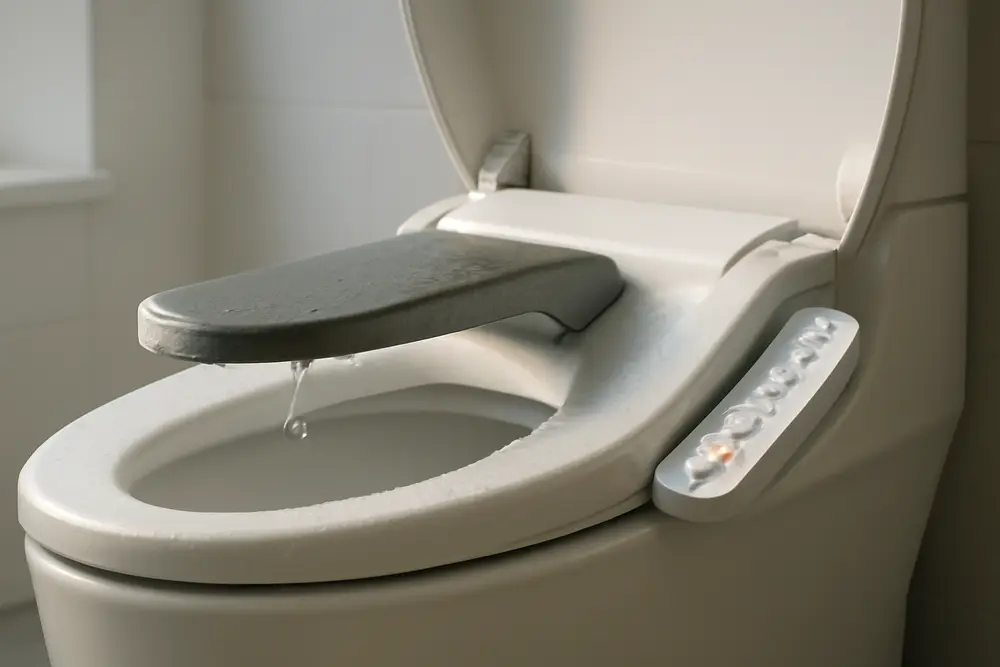
If your toilet is the spaceship of the bathroom, your supply line is the skinny fuel hose keeping it from crash-landing. Smart toilets and bidet seats are fantastic until a barely-there drip turns your subfloor into a soggy confessional and trips your GFCI like it’s training for a marathon. I own a water, mold, and fire damage restoration company in San Antonio, and we absolutely love your techy bathroom upgrades. We just don’t love the sneaky leaks they can spawn if you cut corners on T-valves, backflow, or power routing. Here’s how to keep the clean-butt revolution from wrecking your floors, walls, and wiring.
The New Leak Traps Hiding Under Your Throne
Traditional toilets have a few classic weak spots: the shutoff valve, the supply line, and the wax ring. Add a smart seat or integrated smart toilet and you’ve introduced more fittings, more electronics, and more ways for water to wander somewhere it shouldn’t. Most of the leaks we see with smart toilets and bidet seats start where the T-valve ties into the cold line or where the braided hose meets the seat. Overtightened fittings, missing or mangled rubber washers, cross-threaded nuts, and bargain-bin plastic hoses are the usual suspects. Then there’s the silent killer: power cords draped in the splash zone. Water and electricity are a legendary bad match, and an errant drip near a GFCI-protected outlet is a fast path to nuisance trips or something uglier like arcing.
None of this is a reason to skip the upgrade. It’s a reason to install like a grown-up, verify your backflow protection, route power like you respect electrons, and check for drips the way you’d check a new set of brakes. Do that, and your subfloor stays intact, your GFCI stays quiet, and your smart toilet stays smart.
T-Valves And Supply Lines Done Right
The T-valve is the simple brass or stainless piece that shares the cold water supply between the toilet tank and the bidet seat or smart toilet. Because it sits low and out of sight, it’s also where the tiniest misstep turns into weeks of unnoticed weeping. Here’s how to set it up so it actually seals.
Pick the right T-valve. The threads on your toilet’s fill valve and shutoff are not a one-size-fits-all fantasy. Most residential setups use 3/8 inch compression at the shutoff and 7/8 inch ballcock at the tank. Your T-valve needs to match both ends. Quality matters here. A solid brass or stainless T with good machining beats a mystery-metal special every time.
Use the washers you’re given. Those rubber or silicone washers are not optional. They go inside the female ends, flat side to the mating surface, and they create the seal. If you tighten a dry metal-on-metal connection, what you actually did is build a leak with extra steps.
Do not wrap compression threads with plumber’s tape if the fitting relies on a washer to seal. Tape can stop the ferrule or washer from doing its job and lead to a maddening slow drip. If the manufacturer specifically calls for tape on tapered threads, fine. Otherwise, keep the tape for the right spot.
Tighten like a human, not a gorilla. Hand-tighten first, then a gentle quarter-turn with a wrench. If it oozes, nudge a tiny bit more. If you go full send, you can deform the washer or crack a plastic shank on the fill valve. Cross-threading during that impatient first twist is another leak time-bomb. Back off and realign if it doesn’t spin easy.
Go braided, not brittle. A metal-braided supply hose from the T-valve to your seat is miles better than a rigid or cheap plastic line. Give it a generous loop with no kinks, no rubbing on sharp tile edges, and enough slack that the seat can shift slightly during use without torquing the fitting. A too-short line puts constant stress on the connection and eventually weeps.
Confirm the shutoff valve isn’t the tattletale. If your angle stop is corroded or won’t shut off completely, fix that first. A failing shutoff will fool you into thinking the T-valve is leaking, and it also guarantees heartburn when you need to service anything later.
Do You Need Backflow Protection?
Short answer: yes, you need backflow protection. Whether it’s built into your smart toilet or bidet seat or added externally depends on the model and your local code. Backflow is when contaminated water sneaks back into the clean supply, typically from a pressure drop somewhere else in the system. Personal hygiene sprays are exactly the kind of fixture plumbers think about when they design backflow rules, because the wand can, in theory, contact non-potable water.
Many electric bidet seats include an internal backflow device, like an air gap or an atmospheric vacuum breaker. Smart toilets from reputable brands usually have integrated backflow protection too. The trick is verifying it’s there and certified. Check the manual and spec sheet for language about backflow, air gap, AVB, or a compliance listing. If your device lacks built-in protection or your city wants external containment, you may need an added device such as a vacuum breaker or a testable reduced pressure zone assembly installed by a licensed plumber.
San Antonio homeowners should confirm requirements with their plumber or local authority, because rules can differ by jurisdiction, fixture type, and whether you have other risk factors on the line. When in doubt, never jury-rig backflow. It is about more than passing inspection. It protects your drinking water and your neighbors’ water. If your plumber mentions test schedules or certification tags, that’s normal for certain devices and not a sign they’re upselling you.
Power, GFCI, And Cord Routing
Electric bidet seats and smart toilets heat water, warm seats, light up like a runway, and sometimes air-dry like a hair dryer on vacation. That means they drink power and live next to flowing water. Respect that marriage.
Use a GFCI-protected receptacle. Bathroom outlets in the United States must be GFCI-protected, and your smart toilet or seat should be plugged into one. Many manufacturers recommend a dedicated 15 amp circuit for integrated smart toilets or higher-power seats. Never use an extension cord under a rug or across the bathroom. That is how house fires get their start in the dumbest way possible.
Place the outlet where water is least likely to party. If you’re remodeling, set the receptacle on the wall beside the toilet rather than directly behind the tank or in a splash path. Keep it elevated off the floor. If you have a service panel-style in-wall box, ensure the cover plate fits flush and the box is not loose in the drywall. Loose boxes pull cords and loosen plugs over time.
Give the cord a gentle drip loop. If a droplet does form on the cord, you want it to drip off before it reaches the plug. Avoid tight bends or running the cable over sharp tile edges. Keep it off the floor so it is never sitting in a puddle if something leaks.
If the GFCI trips, listen to it. Unplug the unit, stop using water at the T-valve, and find the moisture. Do not just reset and forget. You might be one trip away from arcing, and that is how you roast outlets or damage control boards inside the seat.
Drip Detection That Actually Works
The only thing worse than a leak is a leak that hides. Most toilet area leaks are slow enough to evaporate before you notice, especially in San Antonio where AC systems are constantly drying the air. Your floor looks fine until it isn’t. Here’s how to catch drips before your grout lines start telling secrets.
Start with your eyes and hands. After install, pressurize the line and run through all the seat functions. Dry every connection with a paper towel, then check again 5, 15, and 60 minutes later. Mineral crust around a fitting is a dead giveaway of an old weep. So is a slightly darker grout halo at the toilet base or a puckered caulk bead.
Add a small leak sensor on the floor behind or beside the toilet. Battery sensors are cheap and loud. If you have smart home gear already, a Wi-Fi water sensor is a great add. Place it where drips would travel, not right under the shutoff where you will kick it. If you are in a second-floor bath, consider two sensors: one near the toilet and one in the ceiling below if there is a chase or can light nearby.
Use a moisture meter if you own one. We do this every day in restoration. Press the pins into baseboard or shoe molding near the toilet. Elevated readings compared to an interior wall in the same room mean something is damp behind the paint. Catch that early and you are saving drywall, insulation, and a lot of sanding.
Keep a nose out for a musty edge. If your bathroom smells like a gym bag that went for a swim, water is likely migrating under flooring or into the wall cavity. Tile hides a lot. Vinyl planks cup. Grout hairline cracks wick water like a straw. Your nostrils often beat your eyes.
Hard Water, Filters, And Seals
San Antonio water is on the hard side, which means scale can build up inside solenoids, heaters, and spray nozzles. Hard water doesn’t just make your shower glass look frosty. It also chews through rubber washers and o-rings faster than you want to believe. That shows up as phantom drips and sticky valves that never quite close.
Install an inline filter if your model supports it. Many bidet seats and smart toilets offer optional mesh filters that sit between the T-valve and the unit. Check and rinse them every few months, more often if you see white flakes or sand in aerators elsewhere in the house.
Descale on the schedule the manufacturer gives. If the manual says run a cleaning cycle with a specific product or white vinegar solution, set a reminder and do it. Scale on an internal valve face creates tiny leak paths that appear as slow drips at your supply line after the seat shuts off. People chase that leak at the wrong fitting and miss the gunked-up valve upstream.
Inspect washers and gaskets during any service. If a connection has been taken apart a few times, replace the washer. They flatten and lose elasticity. Keep a small kit of the sizes your setup uses. It costs pocket change and saves Saturday runs to the store.
Slab Homes And Hidden Damage
Much of San Antonio sits on slab foundations. That means a supply-line drip does not soak a basement where you can see it. It creeps along tile, under vinyl, or behind baseboards. We have torn out perfectly fine-looking bathrooms only to find the back of the baseboard is darker than an espresso and the drywall paper has gone fuzzy with mold. If a leak runs against the wall for weeks, it can wick up the studs and leave you with swollen trim, blistered paint, and that signature musty scent.
Upstairs baths bring gravity into the chat. Water takes the path of least resistance and sometimes that’s the ceiling of the room below. If you spot a circular stain or a seam tape bubble under a second-floor bathroom, kill the water to the bidet seat or smart toilet and start investigating there first. Toilet flanges are not immune either. A long-term supply leak can soak the subfloor around the flange until the wax ring gives up. That adds wastewater seepage to your clean water issue, and now we are talking demolition, disinfection, and rebuilding the flange support to code.
Maintenance You Can Actually Stick To
Your smart throne deserves the same loyalty you give your coffee machine. Keep it happy with quick, regular checks and it will treat you like royalty without the flood.
Do a short monthly inspection. Feel around the T-valve, the shutoff, and the seat’s supply connection with a dry hand. Look for mineral tracks. Make sure the cord is still clipped up and the plug is fully seated in the GFCI. Press the test and reset buttons to make sure the GFCI actually trips and resets. If it does not, replace it.
Every 6 months, gently snug fittings if needed and check washers. If you have an inline filter, clean it. Run the manufacturer’s cleaning or descaling routine. Wipe the wand and nozzle area according to the manual. If the seat has a quick-release, pop it off and clean the mounting area. Hidden grime is moisture’s best friend.
Every 5 to 7 years, replace braided supply hoses proactively. They are tough, not immortal. If the stainless braid is frayed, kinked, or rusting, replace it now, not next week.
Going out of town? Close the toilet’s shutoff and the T-valve supply to the seat. That simple habit has saved more floors than any fancy gadget. Winter storm coming and you are in an older home with iffy insulation on exterior walls? Consider shutting off the line and draining the seat per the manual if you expect a hard freeze.
Install Steps Without The Oops
If you are a capable DIYer, here is the high-level flow that cuts out most mistakes. Read your seat’s manual first, obviously, because thread types and spacing can vary.
Shut off the angle stop and flush the tank. Catch drips with a towel. Remove the existing supply from the tank fill valve. Install the T-valve on the fill valve with the supplied washer. Reconnect the toilet tank line to the T’s straight-through port. Connect your braided line to the side port feeding the seat. Keep a relaxed loop with no kinks. Open the angle stop slowly and watch every joint. Plug in to a GFCI outlet that is safely placed. Let the seat run a full function cycle while you stare at the fittings like a hawk. If you see any moisture, close the valve and adjust. If you get persistent weeping, swap the washer or the fitting. Do not stack tape and prayers on a bad connection.
When To Call A Pro
There is DIY pride and then there is false confidence. If any of the following show up, get a licensed plumber or a restoration pro involved:
Recurring GFCI trips or any scorch marks on a plug or outlet. A musty odor that does not go away after cleaning. Cupped or discolored flooring near the toilet. A rising water bill with no obvious reason. Corrosion or green crust on fittings that comes back after you clean it. Visible staining on the ceiling below an upstairs bathroom. Water that seems to return a few hours after you dry things off. Those are not one-wrench problems. They are the early chapters of a serious moisture story.
On the restoration side, we handle the mess when the drip wins. That means source control, extraction, contained demolition where needed, structural drying with air movement and dehumidification, antimicrobial treatment, and moisture monitoring until readings are back in the safe zone. If you are in San Antonio or nearby communities like Alamo Heights, Boerne, New Braunfels, or Helotes, we can get a tech out to map hidden moisture with pro meters and pin down where the water is getting in. Catching it early usually means drying and minor repairs instead of cutting out half your bathroom wall.
Smart Toilet FAQ
Can I Use Teflon Tape On My Bidet Seat Fittings?
Only where the manufacturer says to. Most connections on bidet seats and smart toilets are compression or washer-sealed and should not get tape. Tape on those threads can block a proper seal and create a slow leak.
Do All Bidet Seats Have Backflow Protection?
No. Many do, but not all. Check the manual for an internal air gap or vacuum breaker listing. If your model lacks it or your code requires external protection, a licensed plumber can add the correct device.
Is A GFCI Really Required If My Outlet Is Far From The Toilet?
Yes. Bathroom receptacles in the United States must be GFCI-protected. Water plus humans plus electricity is a combo that demands fast fault protection regardless of outlet location in the room.
Why Does My Bathroom Smell Musty Even Though I See No Water?
Moisture can hide behind baseboards, under tile, or in drywall paper. A tiny supply-line weep may evaporate at the surface while the wall cavity stays damp. Use a moisture meter or call a pro to check hidden areas.
Should I Shut Off Water To The Bidet Seat When I Travel?
Yes. Close the shutoff and the T-valve feed when you are away. That simple step prevents a lot of damage if a washer fails or a fitting loosens while you are out.
What If The Worst Already Happened?
If you discovered the leak after the baseboard swelled or the GFCI started tattling every morning, do not panic. Kill the water to the seat, unplug it, and blot up what you can. Take photos for your insurance file, because slow leaks can still be covered depending on your policy and timelines. Avoid running space heaters or fans aimed directly into the wall void unless you know the moisture path, because you can push humidity deeper and feed mold. Then bring in a restoration crew that understands bathrooms, electrical safety near wet areas, and how to dry a slab or subfloor without turning your tile into a buckled mess. We are happy to coordinate with your plumber to fix the source while we dry and repair the damage the right way.
Your Next Best Steps
If you are installing a new smart toilet or bidet seat this week, here is the short version of doing it right: choose a quality T-valve and matching threads, use the included washers, avoid tape on compression fittings, route a relaxed braided hose, verify built-in backflow or add the correct device, plug into a GFCI-protected outlet with a sensible cord path, and set a recurring reminder to check for drips. If you are in the San Antonio area and something feels off, we can inspect for hidden moisture, document damage, and get you dried out fast. Upgrade your bathroom tech, just do not upgrade your water damage bill along with it.