
Your fire was small, your aim was solid, and the flames tapped out fast. Now you’re staring at a crime scene of pale yellow powder on your countertops, hinges, and the vents of anything with a power cord. Here’s the part nobody tells you at the hardware store: ABC dry chemical isn’t just messy. It’s monoammonium phosphate that turns acidic when it meets moisture. That means rust on your tools, pitting on copper and brass, and shorts on circuit boards if you let it sit. Clean it right-now fast, or pay for it later. Here’s how to stop corrosion in its tracks, protect your lungs, and keep your HVAC from blasting the stuff into every room.
What ABC Powder Does To Metals
ABC dry chemical extinguisher residue is mostly monoammonium phosphate. While it’s dry, it smothers fire like a champ. Add humidity or a damp rag and it can hydrolyze into phosphoric acid. Translation: a sneaky corrosion accelerator. Bare steel and iron flash-rust, copper and brass pit, aluminum can get chalky stains, and chrome loses its shine. Electronics are extra touchy because the powder is fine enough to lodge under chips and in connectors. Add a little moisture later and the residue can become slightly conductive, inviting shorts and early death for your gear. Timing matters here. Hours count, especially if your space is humid.
First Moves After Discharge
Kill the power to anything dusty. Unplug devices and flip the breaker for the affected area. Close or seal nearby HVAC registers with plastic and painter’s tape so your system doesn’t suck in powder and redeposit it in your bedrooms. Put on gloves, safety glasses, and a real respirator. An N95 will do in a pinch, but a P100 is better if you’ve got it. This is not regular dust. It’s fine, abrasive, and not friendly to airways or eyes.
Safe Cleanup Sequence
Start dry, then go wet, then protect. You’ll avoid smearing residue into paste where you don’t want it and you’ll neutralize what’s left before it bites metal. Here’s the smart play:
| Step | Action | Why It Matters |
|---|---|---|
| 1 | HEPA vacuum gently with a soft brush. Scoop heavy drifts first. | Removes the bulk without blasting powder back into the air. |
| 2 | Mix a mild alkaline cleaner: 1 tbsp baking soda per quart of warm water. | Buffers acidity from monoammonium phosphate without being harsh. |
| 3 | Wipe non-electronic hard surfaces with the solution, working small areas. | Neutralizes residue on metals, tile, painted surfaces, and appliances. |
| 4 | Rinse with distilled or deionized water. Dry immediately. | Removes salts and stops streaking. Fast dry halts corrosion. |
| 5 | After drying, apply a thin film of corrosion inhibitor or light oil. | Shields clean metal from flash-rust and fingerprints. |
Skip bleach, acidic cleaners, and anything chloride-heavy. They’re teamwork for corrosion. Keep ventilation gentle while cleaning so you’re not pushing dust deeper into crevices.
Circuit Board Anticorrosion
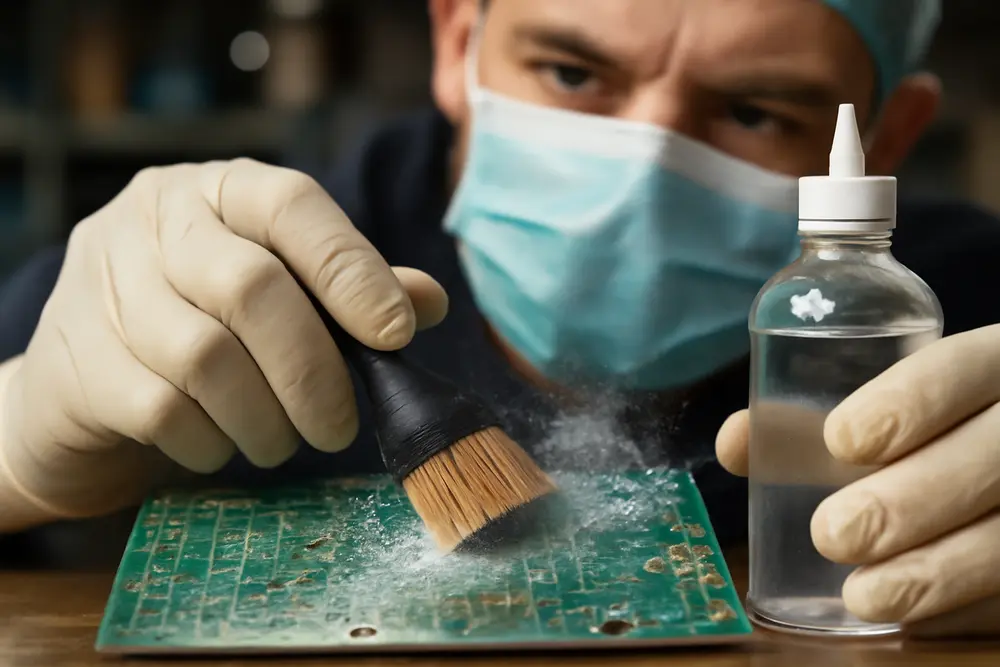
If powder touched electronics, pretend you’re handling a newborn made of razor blades. No power and no impatience. Start with careful exterior HEPA vacuuming using a soft ESD-safe brush. If you’re comfortable opening the device, remove batteries and covers, then lift out boards for safe access. For the actual cleanup, use high-purity isopropyl alcohol and a soft ESD brush to loosen residue from components, sockets, and connectors. For stubborn pockets under ICs or inside connectors, a controlled rinse with distilled water can help, followed by a thorough alcohol chase to displace water. Dry with gentle airflow in a low-humidity environment. Do not bake boards in the oven. A few hours near a dehumidifier or 24 hours in a room with 35-45 percent RH works.
Once clean and dry, focus on circuit board anticorrosion steps: treat connectors and edge contacts with a contact conditioner designed for electronics, then consider a corrosion inhibitor made for PCBs if the device operates in humid spaces. Conformal coating is an option only after full testing and only on boards that don’t need frequent service. If you see etched copper, lifted pads, or green-blue bloom in vias, call a pro restoration shop or electronics repair lab. Turning on a maybe-clean board is a great way to make it a no-chance board.
Metals And Appliances
For stainless, painted steel, and enameled finishes, do the HEPA pass first, then the baking soda solution wipe, rinse, and fast dry. Add a whisper-thin layer of protectant like a light machine oil, Boeshield, or a purpose-made corrosion inhibitor. For bare steel tools, wipe, rinse, dry, then oil pivots and blades. Copper, brass, and aluminum need the same sequence, but go easy on scrubbing so you don’t grind abrasive powder into the surface. Microfiber beats scouring pads here. If aluminum shows white oxidation, repeat the mild alkaline wipe and rinse, then protect. Avoid steel wool on stainless or aluminum unless you like rust freckles and scratch maps.
Keep HVAC From Spreading Dust
Your heating, ventilation, and air conditioning system is a giant powder relay if you let it run. Keep it off until cleanup is complete in the affected area. Seal supply and return grilles in that zone while you work. Replace the filter with a high-MERV option after cleaning and check the air handler compartment, blower wheel, and coils for residue. If the system pulled in powder while the fire was happening, plan on a targeted duct and coil cleaning. After you’re done, run the system only with a clean filter in place and, if you have one, an in-room HEPA air scrubber for a day.
Protect Your Lungs
Dry chemical extinguisher residue is fine enough to hang in the air and rough enough to irritate eyes and airways. Wear safety glasses or goggles, gloves, and a respirator. Vacuum slowly and keep movements deliberate so you’re not launching powder clouds. When you switch to wet cleaning, keep windows cracked and use gentle, directed airflow instead of box-fan hurricanes.
When To Call Pros
Get help if electronics are expensive or mission-critical, if powder reached inside your HVAC, if corrosion is already visible, or if the affected area is bigger than a room. Restoration techs bring HEPA vacuums that don’t belch dust, pH testing, corrosion inhibitors that actually work, ultrasonic cleaning for boards, and documentation your insurer will accept. If you’re in over your head, you’re losing hours while corrosion gains ground.
Quick Do And Don’t Checklist
- Do act within hours, not days.
- Do use a HEPA vacuum and soft brushes before any wet wipes.
- Do neutralize with a mild baking soda solution on non-electronic surfaces.
- Do rinse with distilled water and dry fast, then protect metals with light oil or inhibitor.
- Don’t power electronics until fully cleaned and dry.
- Don’t run HVAC in the affected zone until cleanup and filter replacement.
- Don’t use bleach, acidic cleaners, or abrasive pads.
FAQ
How fast can ABC residue start corroding metal?
Corrosion can begin within hours, faster if the area is humid or the residue landed on damp surfaces. That’s why the HEPA-first, neutralize-next routine needs to start immediately.
Can I just blow electronics out with compressed air?
Canned air moves powder deeper and can add condensation. Use a HEPA vacuum with a soft ESD brush, then clean with high-purity isopropyl alcohol. If powder reached under components, a pro ultrasonic clean may be the only safe bet.
Is vinegar good for neutralizing the residue?
No. Vinegar is acidic, and the whole point is to buffer acidity. Use a mild alkaline mix like baking soda in warm water for non-electronic surfaces, then rinse with distilled water and dry immediately.
What filter should I use after cleanup?
Install a fresh high-MERV filter, ideally MERV 11 to 13 if your system allows it, and recheck it after a day of runtime. If it loads quickly, there’s likely more residue in the ducts or air handler that needs cleaning.
What if my extinguisher dusted my server rack?
Shut power, seal the room, HEPA vacuum externally, then remove and bag devices for bench cleaning. This is a call-the-pros scenario. You’ll need circuit board anticorrosion steps, thorough drying, and post-clean verification before restart.