
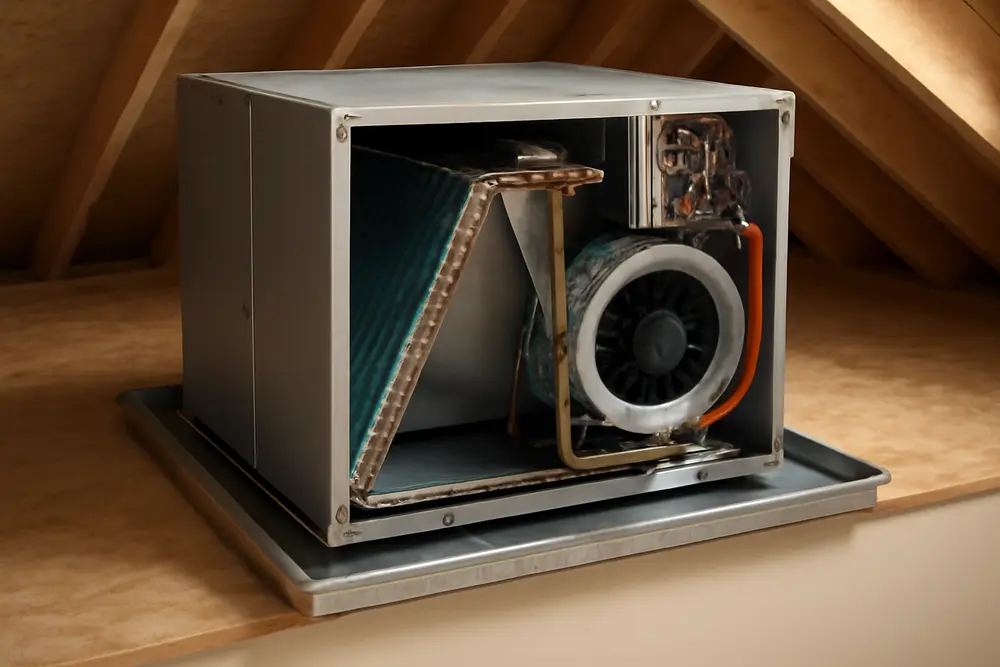
Your ceiling never texts you before it quits. One minute you’re loving that cool air, the next you’re staring at a brown halo blooming across your drywall like a coffee stain from the sky. Nine times out of ten, the villain is a clogged condensate drain line. That tiny pipe has one job: carry away the water your air conditioner pulls out of the air. When it clogs, water goes where gravity wants it to go, which is usually your ceiling, insulation, and patience. I own a restoration company. I’ve seen the aftermath. It’s not cute, it’s not cheap, and it’s entirely preventable with a little air conditioner drain clog prevention and a humble hero called the secondary drain pan.
Why Ceilings Get Soaked
Your AC doesn’t just cool air, it dehumidifies it. That moisture collects on the evaporator coil, falls into a drain pan, and exits through a PVC drain line to the outdoors. When everything flows, you never think about it. When it doesn’t, you get water backing up into the pan and over edges you didn’t even know existed.
Clogs usually start with biology. Warm, wet interiors of drain lines are prime real estate for algae, mold, and bacterial slime. That biofilm catches dust and lint like Velcro, eventually choking the line. If your air filter is filthy or undersized, extra dust, lint, and pet hair end up in the pan, hitching a ride to your drain where they pile up and make a felt-like plug. Multiple sources agree that microbial growth and debris are the top culprits, with filter maintenance sitting center stage for prevention. See guidance from GaryAir and Angi for the greatest hits from the field.
The pipe itself can be the problem. If the PVC sags between hangers, holds a belly of water, has a poor slope, or lacks a clean-out with a cap, drainage slows and gunk sits. Old metal drain pans rust or crack, then water takes the path of least resistance to your ceiling. Finally, many attic or above-ceiling air handlers were installed without backup protection. No secondary drain pan, no float switch, and no alarm means the first alert you get is falling paint and a new indoor waterfall.
Early Warning Signs
You can catch a condensate problem before it wrecks drywall if you know what to look for. Start with your nose. A musty odor at the vents or near the air handler often means stagnant water or microbial growth in the pan or line. Next, look for water where there shouldn’t be any: damp spots under the air handler, standing water in the primary drain pan, or drips at the secondary drain line if you have one. That secondary line is supposed to be dry. If it’s dripping, the primary is failing and you’ve got a clock ticking.
Another tip-off is your AC quitting mid-heatwave. That could be a float switch doing its job by shutting the unit down when the pan fills. It’s annoying, but that’s your system saving your ceiling. Ceiling stains near the unit or duct runs, peeling paint, or a faint bulge in the drywall are late-stage warnings. Indoor humidity that refuses to drop or cooling that feels sluggish can also point to drainage issues, because a flooded pan and nasty evaporator coil aren’t performing at their best. These warning signs align with field guidance from GaryAir and Angi, and they match what we see every summer.
DIY Prevention That Works
I love it when simple beats expensive. You can keep most AC drain lines clear with five-dollar habits and a little calendar discipline. Here’s the backbone of air conditioner drain clog prevention at home, with details that actually work.
Start with the vinegar flush. Find the drain line clean-out at your indoor unit. It’s usually a short vertical pipe with a removable cap near the coil or pan. If you don’t have a clean-out, make a note to add one or have a tech install a tee with a cap. With the AC off, remove the cap and slowly pour about half a cup of distilled white vinegar into the line. Let it sit for 20 to 30 minutes to soften slime, then follow with a cup of water. Do this monthly during heavy cooling season and every couple of months in spring and fall. This is a safer option than bleach for most systems, especially where metals and glues live. Never mix vinegar and bleach. That creates toxic gas. If you already used bleach recently, skip the vinegar until the next month.
Hit the drain from the outside too. At the exterior termination of the condensate line, put a rag around a shop vacuum hose and the pipe to form a seal. Run the vacuum for 30 to 60 seconds to pull out algae and debris, then flush from the clean-out again. There are good how-tos on this approach, like this guide, and it lines up with what our techs do in the field for quick clears.
Replace air filters on time, every one to three months. If you have pets or lots of dust, go monthly. A clean filter reduces the debris load falling into your primary pan, which keeps the line cleaner longer. While you’re there, eyeball the pan. If you see standing water when the AC is running, something’s wrong. Check for rust, cracks, or slime. Wipe it out with a clean cloth and a little soapy water. Rinse lightly and make sure the water exits the primary line.
One more easy check: verify that the drain is sloped the right way. It should run downhill all the way to the exit, with no bellies or high spots. If you see sags, support the pipe with proper hangers. If you spot a capped opening or a place where a clean-out tee could go, add it. Access makes maintenance exponentially easier. For detailed vinegar guidance, this quick reference hits the essentials, and Angi’s tutorial covers what to expect.
| Task | How | Frequency |
|---|---|---|
| Vinegar Flush | Pour about 1/2 cup white vinegar into the clean-out, wait 30 minutes, then add water. | Monthly in summer, every 2 to 3 months off-season |
| Change Filters | Swap for the correct size and MERV rating your system can handle. | Every 1 to 3 months, monthly with pets or dust |
| Pan Inspection | Check for standing water, rust, cracks, and slime. Clean gently. | Seasonally or during tune-ups |
| Shop Vac Clear | Vacuum the exterior drain end for 30 to 60 seconds, then flush from the clean-out. | As needed when drainage slows |
Safety Upgrades That Pay Off
If your air handler is in the attic or over finished space, you need a secondary drain pan. Full stop. This is the shallow, wide pan that sits under the unit itself, entirely separate from the primary pan inside the air handler. When a primary pan cracks or the drain line clogs, water drops into the secondary pan instead of dropping into your living room. That secondary pan should have its own dedicated drain line that terminates in a location you can see, like over a window or near a doorway. If it drips, it is telling you to fix the primary before damage happens. Many local codes require this setup for above-ceiling equipment, and for good reason.
Now pair that pan with a float or overflow safety switch. The float switch sits in the pan or in-line with the drain and shuts off the system or triggers an alarm when water rises. The AC quits, you notice, and you fix the blockage before your ceiling taps out. Models vary, but the concept is simple. Manufacturers like Little Giant show common configurations and specs.
Other smart upgrades: add a clean-out tee with a cap if you lack one, correct the drain slope to a steady downhill run, size the drain pipe as recommended by your HVAC manufacturer, and include a visible backup line. A small leak alarm or a smart sensor in the secondary pan can send alerts to your phone. If you prefer set-it-and-forget-it, this is as close as you’ll get.
Typical costs are modest compared to repairs. A secondary drain pan can range from about 30 to 100 dollars depending on size and material, plus a couple of hours of labor. Float switches generally run about 20 to 80 dollars, plus installation. Adding a clean-out tee and re-hanging a sagging drain line is usually a quick visit. Compare that to drywall, paint, insulation, and mold cleanup, and the math does itself.
When to Call a Pro
DIY is great until it isn’t. Call an HVAC tech if the line keeps clogging even with monthly flushes, if you see any evidence of pan rust or cracks, if the drain line has no slope and needs rework, or if your air handler lacks a secondary drain pan and you want one installed. If your unit shuts off repeatedly, that float switch is crying for help and you need a proper cleaning. If your system has no clean-out access, a pro can add one and service the coil and pan in the same visit.
Call a restoration company right away if you see wet ceilings, sagging drywall, bubbling paint, mold spots, or if water has soaked insulation. Turn off power to the air handler at the breaker, place a small container under active drips if safe to do so, and avoid stepping on a soaked ceiling from the attic side. Water and electricity are a bad couple. Fast extraction and dry-out within the first 24 to 48 hours prevents mold from setting up shop.
What Ignoring This Costs
Here’s what we see after a slow condensate leak runs wild. Ceiling drywall replacement typically starts a few hundred dollars for a small patch and climbs into the thousands when a large ceiling section and insulation are involved. Painting can double that if multiple rooms connect. If the leak quietly soaked framing or ducts, you may need antimicrobial treatments and targeted mold remediation. That can range from a few hundred to several thousand depending on the area and whether duct cleaning or removal is required. Toss in the cost of running dehumidifiers and air movers for a few days, plus your AC service fee to fix the original clog, and the total is the kind of weekend you would rather spend on a beach.
On the flip side, a jug of vinegar, fresh filters, and a properly installed secondary drain pan with a float switch are what keep you in the cheap zone. The most expensive drip is the one you never noticed.
Your Seasonal Game Plan
Spring is prep time. Change the filter, flush the drain line with vinegar, vacuum the exterior drain, and verify that water exits freely. Pour a small cup of water into the primary pan and watch that it leaves the building within a minute or two. If you have a secondary pan, clean it and test any float switch by gently lifting the float to verify the system shuts off. If there’s no reaction, get that fixed before summer heat.
Summer is maintenance mode. Run monthly vinegar flushes, keep filters fresh, and check that your secondary drain line isn’t dripping. If you smell mustiness, check for standing water in the primary pan. If you see it, shut the system off and clear the clog. Keep your thermostat fan set to auto, not on, so you’re not creating unnecessary condensate and blowing humid air across a wet coil.
Fall is cleanup and inspection. As the AC works less, extend flushes to every couple of months, swap the filter, and look at the drain slope, hangers, and insulation. If you plan to have an HVAC tune-up, ask the tech to clean the coil, clear the drain line, verify switch operation, and confirm the drain line size and route are correct. If the unit is in an attic, confirm the secondary drain pan and line are present and intact.
AC Drain FAQs
Can I Use Bleach Instead Of Vinegar?
Vinegar is the go-to for routine maintenance because it’s less harsh on metals and PVC glues. Bleach can corrode parts and isn’t great for your coil or nearby materials. Never mix bleach and vinegar. If you do choose bleach once in a blue moon, use a very small amount, flush thoroughly, and avoid repeating. Most homeowners should stick with white vinegar.
How Do I Know If My Drain Is Flowing?
During cooling, you should see steady drips or a small stream from the exterior condensate line. If your secondary line is dripping, the primary is either clogged or the pan is overflowing. Indoors, you can pour a cup of water into the primary pan and confirm that it exits outside within a minute or two. Slow movement or gurgling usually means it’s time to clear the line.
Where Should My Secondary Line Terminate?
To somewhere you will notice. Commonly over a window, near an exterior door, or over a conspicuous spot where a drip gets your attention. If it dumps into the same location as the primary line or a hidden drain, you lose that early warning.
What Size Should The Drain Line Be?
Most residential systems use 3/4 inch PVC for the condensate line, but you should follow your equipment manufacturer’s instructions and local code. Larger equipment or long runs may require specific diameters and slopes to prevent standing water.
Will A Smart Thermostat Alert Me To Leaks?
Some smart thermostats can be wired to recognize a float switch trip and show an alert. You can also add stand-alone leak sensors in the secondary pan that send push notifications. If you rely on your phone for everything else, let it snitch on leaks too.
How Often Should A Pro Tune Up My System?
Once a year for cooling-focused systems, twice if you have a heat pump in a humid climate. Ask for a coil cleaning, drain line clear, pan inspection, and float switch test as part of the visit. It’s a small ticket compared to the repairs it prevents.
What To Do If You Find Water
If you catch a small drip early, shut off the AC at the thermostat, then the breaker if water is near electrical parts. Set a container under the leak if safe. Vacuum the exterior drain line, flush from the clean-out, and check the pan for cracks. If the ceiling has a softball-sized stain or bigger, resist the urge to poke it. That can dump a bucket of brown water on your floor. Call a pro for controlled removal, drying, and to check for hidden moisture in insulation and framing. If you smell earthy, sweet, or dirty-sock odors after things dry, have the area inspected for mold growth.
Why The Secondary Drain Pan Saves Ceilings
A secondary drain pan is like a goalie. It doesn’t score, it prevents disasters. It buys you time to see the problem and fix it without repainting half your house. When paired with a float switch, it also shuts the system down before the pan overflows. Some homes rely on luck. Smarter homes use layers: clean primary drain, correct slope, regular vinegar flushes, a secondary drain pan, a visible secondary line, and at least one float switch. That stack is why the phrase secondary drain pan is more than a parts list item. It’s the difference between a five-minute phone call and a week of fans roaring through your hallway.
If you’re already dealing with a wet ceiling or a musty attic, call us. We dry structures, clean up mold, and put homes back together. Then we help you add the low-cost upgrades that stop a repeat. Your AC can cool like a champ, your ceiling can stay white, and your weekends can be for anything other than buckets and towels.