
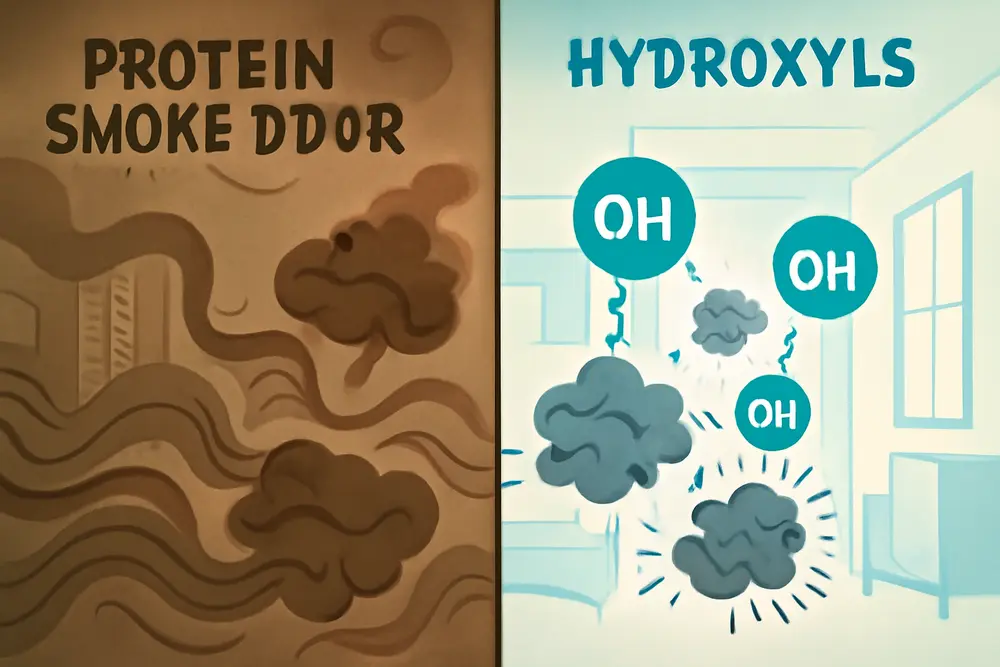
Your kitchen smells like a burnt omelet that refused to die, and the walls feel sticky even though they look clean. Welcome to the lovely world of protein smoke odor, the ghost of dinners past. It is invisible, greasy, and it loves drywall, cabinets, and vents like your dog loves bacon. Ordinary wipe-downs will not fix it. Pros knock it out with a one-two hit of alkaline and enzymatic cleaning, HEPA air control with negative air, targeted thermal fog for the sneaky spots, hydroxyl deodorization for safe-around-people oxidation, and finish with sealing where needed. If that sounds like overkill, trust me, it is the difference between a house that smells neutral and a house that keeps reheating last month’s kitchen fail every time the AC kicks on.
What Is Protein Smoke Odor?
Protein smoke odor comes from overcooked or burned foods that are high in proteins and fats, like meat, poultry, eggs, and dairy. Hit those with high heat and you get denatured proteins mixed with vaporized oils that polymerize. Translation: the smoke turns into a clingy, nearly invisible film that acts like a microscopic glue. It lays down a tacky, yellow-brown residue that does not look like typical black soot, but it is every bit as stubborn. That film bonds to paint, varnish, tile grout, light lenses, and everything inside your kitchen, then hitches a ride through your HVAC so the whole house gets invited to the scent party you never wanted to host.
The kicker is that the odor comes from more than just “grease.” The protein component is the real punk here. It binds tight, holds on through half-baked wipe-downs, and keeps off-gassing even when the surface looks fine. If you can smell a meaty, sour, burnt note but do not see much soot, you are probably dealing with protein smoke.
Why Regular Cleaning Fails
Regular household cleaners are not built for protein-bonded residue. They can move the grease around, make the surface feel less sticky, and still leave the underlying film. That means the odor molecules stay trapped in a microscopic layer that keeps releasing vapors. Fragrance sprays and candles just layer perfume on the problem, and repainting on top of contaminated walls can make it worse because you trap odor under a new finish that still off-gasses every time the room warms up.
The other fail point is coverage. Protein films travel farther than you think. They settle in return plenums, on fan blades, in light fixtures, around switch plate edges, behind cabinet trim, and inside wall voids. If you do not locate and treat the spread, the odor creeps back like it pays rent.
Where This Odor Hides
Protein smoke loves porous and semi-porous surfaces. Expect stubborn contamination on flat paint, raw wood inside cabinetry, acoustic ceiling textures, and unfinished framing in adjacent rooms. Plastic appliance housings, fridge gaskets, range hood interiors, and the underside of microwave trim are classic hot spots. Inside the HVAC, contamination often settles on returns, filters, coils, and first-run duct sections. If a room nearby smells off while the kitchen seems okay, check the lighting and electrical trims first. Thin film plus a little heat buildup equals fresh odor release.
The Pro Game Plan
Professionals start with inspection and scoping. We identify where the residue went, note any heat distortion on finishes, check air movement patterns, and test surfaces. Then we sequence the solution. First is removal of the source film with targeted chemistry. Next comes air control with HEPA filtration and negative air so we do not spread residue or fine particles to clean rooms. Once surfaces are decontaminated, we deodorize the air and the hard-to-reach voids with thermal fog or wet fog when needed, and we run hydroxyl deodorization to oxidize remaining volatile compounds in an occupied home. If stubborn areas still whisper burnt breakfast, we seal them with an odor-blocking primer and reassemble the finishes. That is how you turn off the stink for good.
Alkaline And Enzymatic Cleaning
Breaking the protein bond is the whole ballgame. Alkaline degreasers and surfactant-rich cleaners cut the oil portion and start to lift the film. Enzyme-based cleaners then go after the protein part, basically snipping it down so it cannot hold on. Dwell time matters. These are not spray-and-run products. We apply, let it work, then agitate gently with non-scratch pads or microfiber. On sensitive finishes, we test in a discreet spot first, adjust dilution, and keep pH-balancing rinses ready so we do not etch or haze. Multiple passes are normal. If you only do one pass and call it a day, the odor will clap back within 24 hours.
Porous materials take extra finesse. Flat paint and raw wood often need controlled wet cleaning followed by quick-dry tactics so moisture does not soak in. Cabinets may need interior panel cleaning where they look perfectly fine at a glance. Stone and grout get special attention because the residue loves to lodge in microscopic pores. Contents like textiles, plush toys, and soft furniture typically go off-site for specialized laundering or ozone-only when the structure is vacant. On-site, we prioritize what is actually causing odor versus what just picked up a bit of haze.
Controlling The Air
As we clean, we put HEPA air scrubbers to work and often create negative air in the affected zone. That means contaminated air gets pulled through filtration and exhausted, rather than drifting into your clean bedroom or settling on just-cleaned counters. Fine protein aerosols are light enough to hang out and redeposit if you do not control airflow. Fresh filters are non-negotiable. We typically run HEPA continuously through the cleaning and deodorization phases so we are not chasing our own tail.
Fogging, Hydroxyl, Or Ozone?
Thermal fogging or wet fog is a tactical tool. Heated fog recreates a smoke-like path so deodorizing agents can reach cracks, cabinetry joints, and light voids. It does not replace cleaning. It is the helper that gets the last-mile gaps.
Hydroxyl deodorization is the workhorse when people need to stay in the home. Hydroxyl generators create hydroxyl radicals in the treatment zone that react with odor-causing compounds in the air and at surface boundaries. This approach is gentle on materials and electronics and we can run it while the home is occupied. It is slower than ozone, which is why we start it early and keep it running through the project.
Ozone is the big hammer that we only bring out when a building is vacant and all safety protocols are in place. It oxidizes fast, penetrates deeply, and can finish off stubborn odors in structural fires. It can also degrade rubber, some plastics, and certain finishes if you do not know what you are doing, which is why it is never a first choice in occupied homes and never a shortcut for missing cleaning steps.
| Method | Occupancy | Material Safety | Typical Time | Best Use |
|---|---|---|---|---|
| Hydroxyl Generators | Safe while occupied | Gentle on electronics and fabrics | 48 to 96 hours for heavy odor | Occupied homes, contents-heavy jobs |
| Ozone Generators | Vacant only | Risk to rubber and some plastics | 24 to 48 hours | Vacant structures, deep odor after cleaning |
| Thermal or Wet Fog | Short-term area clearance | Depends on agent and application | Minutes to hours | Cracks, cavities, cabinetry, last-mile coverage |
Hydroxyl Deodorization Basics
Hydroxyl radicals are highly reactive molecules that occur naturally outdoors. Generators create them indoors using UV light and a catalyst or similar tech. They react with odor-causing VOCs and break them down into simpler, less smelly compounds like carbon dioxide and water. The upside is big: you can run the equipment while the space is occupied, it is gentle on finishes, and it plays well with electronics, artwork, and textiles. The catch is time. Protein smoke odor is persistent, and you are treating air volume plus boundary layers, so the equipment runs continuously for several days on strong cases.
Placement matters. We position units to drive gentle circulation without blasting dust bunnies across your living room. Doors and registers are adjusted to balance flow so radicals reach return paths and bad-air pockets. We keep HEPA running during hydroxyl treatment so anything that drops out of the air gets captured, not redistributed.
HVAC And Hidden Pathways
If the kitchen shares air with the rest of the house, your HVAC system is an odor highway. Filters need to be replaced early and again after work wraps up. Return plenums, first-run ducts, and coil surfaces may need cleaning or fogging. Registers and grilles get pulled, cleaned, and reset. We also check ceiling voids, soffits, can lights, and exhaust runs because warm fixtures can keep activating odor even after you wipe them. Once the system cycles clean and everything is treated, the house stops smelling like a diner after a grease fire.
When Do We Seal?
Sealing is not a magic eraser, it is a finishing move. After cleaning and deodorization, stubborn porous areas may continue to hint at odor because tiny pockets inside the substrate still off-gas under heat. That is when we spot-seal or full-seal with an odor-blocking primer that locks remaining vapors behind a non-permeable film. Raw framing, attic decking near a kitchen fire, and flat-painted ceilings are common sealing targets. We also seal small voids, gaps around penetrations, and areas where trim meets wall so that odor does not drift out of hidden spaces after the project ends. Once sealed and repainted, those areas behave like fresh surfaces again.
Real-World Scenarios
Scenario one: occupied home, heavy protein smoke from a forgotten roast. We isolate the kitchen and adjacent rooms, start HEPA and negative air, then hit all surfaces with alkaline and enzyme cleaning. While crews clean, hydroxyl units run continuously. Cabinets get inside-and-out treatment, lighting gets opened and cleaned, and the range hood interior is degreased like it means it. After fogging to hit cabinet joints and trim gaps, we run hydroxyl for another 48 hours. Minor ceiling areas get spot-sealed. Odor is gone without kicking anyone out.
Scenario two: vacant property with heavy spread into ducts and multiple rooms. Same cleaning sequence, but after cleaning we deploy ozone with strict containment and monitoring. Fogging hits dead zones. Once ozone neutralizes the remaining odor load, we ventilate fully, reset with HEPA, change filters again, and seal a few high-porosity zones before repainting.
Scenario three: contents-heavy odor with light structural impact. We remove soft goods for specialized washing and treat on-site furniture with targeted cleaning. Hydroxyls run while we process the space, then we return contents once the structure is neutral. Zero masky fragrances, just clean air.
What Homeowners Usually Miss
Most folks wipe the obvious surfaces, ignore the ceiling, forget cabinet interiors, and never look inside lights or returns. Then they paint, it still smells, and the paint gets blamed. Paint is not a filter. If you do not break the protein bond and remove the film first, you are basically sealing in the stink so it can slow-cook your new finish every time the room warms up. The other miss is air control. Scrubbing without HEPA and negative air just redistributes fines like smoky confetti.
Why Pros Start With Cleaning
Deodorization that skips cleaning is just an air freshener with a fancier resume. Source removal reduces the odor load by a massive margin, which means every deodorization step afterward works better and faster. Alkaline to break grease, enzymes to cut protein, rinse to balance pH, dry fast to avoid wicking, repeat as needed. Once that foundation is done right, fogging, hydroxyls, or ozone are tools that finish the job instead of masking a mess.
FAQ: Protein Smoke And Hydroxyls
Why does my house still smell after I cleaned everything?
Because the film is still there. Protein smoke bonds to surfaces and hides in vents, fixtures, and voids. You need the right chemistry, dwell time, and full coverage, plus air control and deodorization.
Is hydroxyl deodorization safe while we stay home?
Yes when used correctly. Hydroxyl units are designed for occupied spaces. We set and monitor equipment, manage airflow, and keep HEPA going so you get cleaner air while we work.
Can I just repaint the kitchen?
Not before decontamination. Paint over a protein film can trap odor and keep it active. Clean and deodorize first, then use an odor-blocking primer if needed, then repaint.
How long does a typical hydroxyl treatment take?
Light cases can neutralize in about 24 to 48 hours. Heavy protein smoke often runs 48 to 96 hours. We size the equipment to the volume and adjust as we verify results.
Is ozone better than hydroxyl?
Ozone is faster but requires vacancy and has material risks. Hydroxyl is safer for occupied homes and sensitive contents. We choose based on the project, not on a one-size-fits-all preference.
Why Choose Sapphire Restoration
We are certified odor control specialists who actually understand the chemistry of protein smoke and the real-world tactics that clear it for good. Our teams in San Antonio treat the source, not just the smell. We scope thoroughly, clean with the right alkaline and enzymatic products, control the air with HEPA and negative pressure, deploy targeted thermal fog where it counts, run hydroxyl deodorization so you can stay put, and seal only when it is the smart finishing move. This is what we do every week, from small kitchen mishaps to full-structure smoke cleanups.
If you want to see how we handle fire and smoke issues end to end, check out our fire damage restoration page. You will get the full breakdown of how we clean, deodorize, and restore without turning your home into a construction zone any longer than necessary.
Ready To Clear The Kitchen Smoke?
If your place smells like protein shake meets campfire, we can fix it. Call Sapphire Restoration for a professional inspection, a straight-shooting scope, and a plan that uses the right chemistry, airflow, and deodorization sequence to end protein smoke odor for good. We are local, we answer after hours, and we will tell you exactly what it takes to make your home smell like nothing at all, which is the best smell there is.