
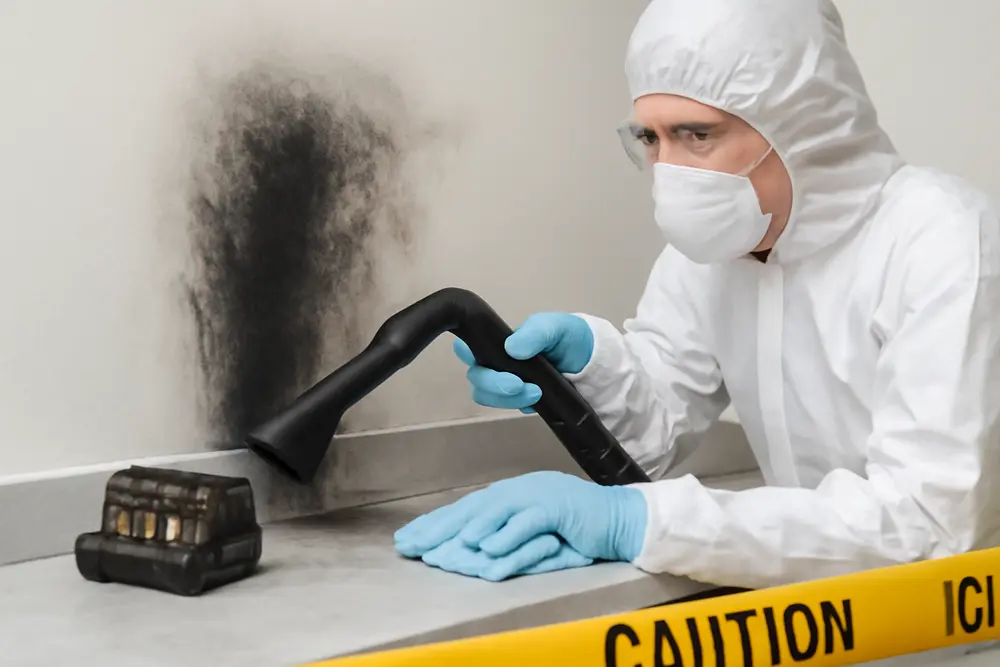
If a lithium-ion battery in your house just went thermal and threw a soot party, you are not just dealing with smoke discoloration. You are dealing with a sticky, acidic, metal-laced mess that likes to travel through your ductwork, chew on your wiring, and keep corroding long after the fire is out. This guide cuts the fluff and gives you straight answers on lithium-ion battery fire cleanup, corrosive soot decontamination, safe entry, HVAC decon, what can be salvaged, and when to hand off to the pros. Yes, I run a restoration company. No, I am not here to sell you fairy dust. Let’s keep your home, your lungs, and your electronics out of the danger zone.
What Makes Li-Ion Fire Soot Different
Typical cooking smoke or a candle mishap leaves greasy carbon on your walls. Lithium-ion battery fires leave that plus a package of chemistry you do not want to sniff or rub into your skin. When the electrolyte salt LiPF6 breaks down under heat, it can produce hydrogen fluoride gas along with phosphoryl fluoride, and that combo sets you up for fluoride-containing residues on surfaces. Studies have found fine particulate soot loaded with fluorides, phosphates, metals like lithium, nickel, cobalt, and manganese, and other organics that stick aggressively to surfaces and move with air currents into rooms that never saw a flame. These residues are acidic, they love humidity, and they keep reacting. That is why a panel or appliance that looked fine on day one can be a corroded disaster by week two. If you want receipts, see research summaries from MDPI and others that clocked acidic PM2.5 and HF generation from Li-ion incidents (MDPI, ScienceDirect), and EPA work showing airway inflammation and fluoride content in the smoke particulates (EPA).
First 24 Hours: Safety Steps
Once the flames are out and the space is released by the fire department, think like a hazmat-lite project. If there is any hint of ongoing smoke or off-gassing, do not reenter. HF is corrosive and can injure skin and lungs at quite low levels. First responders wear SCBA and encapsulating suits for a reason (NIOSH).
If the scene is cool, smoke free, and you need to secure the home briefly, limit your time. Keep children, pets, and anyone with asthma out. Power down the HVAC so you are not blasting soot through the supply trunks. Close interior doors to clean rooms if they were not already open during the event. Open exterior windows near the source to create a short exhaust path. If you set a fan in a window, point it out, not in.
Do not dry sweep, blast with compressed air, or slap surfaces with a towel. That just launches fluoride-laden particles back up your nose. If you must touch anything, wear nitrile gloves, eye protection, and a P100 particulate respirator. An acid-gas cartridge can help with residual corrosive gases, but it is not a substitute for SCBA in unknown atmospheres. Keep your exposure short and your movements minimal. If you get residue on your skin, wash with copious soap and water and seek medical help if you suspect HF exposure. If the battery carcass is still present, do not bag it yourself unless the fire department or a hazardous waste contractor hands you instructions. Damaged cells can reignite.
Photograph the damage before doing anything else. Your insurance adjuster is going to want proof, and you want today’s corrosion documented before it turns into tomorrow’s wiring failure.
Gear You Need Right Now
Skip the bandana. For any reentry or very light source-area prep, wear a tight-sealing respirator with P100 filters, chemical splash goggles, nitrile gloves under heavier utility gloves, and long sleeves that can be laundered hot or tossed. Disposable coveralls are fantastic here because viscous soot clings. Seal used PPE in bags before you bring it through the rest of the home. If you have a HEPA air scrubber or a portable HEPA air purifier with activated carbon, you can run it in the affected space after the room is ventilated and the HVAC is off. Do not try to correct the odor with plug-in fragrances. Covering acid with lavender is not a strategy.
Lithium-Ion Battery Fire Cleanup Steps
Corrosive soot decontamination is not like wiping up spilled hot cocoa. The plan is to gently lift, capture, neutralize, and rinse without pushing acids deeper or atomizing particles into the air. That means methodical, damp methods and HEPA capture, not feather dusters and brooms.
Start with containment. Close vents in the affected area, cover supply and return grills with plastic for now, and keep foot traffic out. Park a clean doormat or sticky pad at the entry to the work zone. Stage heavy contractor bags, clean microfiber cloths, a mild alkaline cleaner, buckets, and a genuine HEPA vac with sealed housing and clean filters.
Pre-clean the heaviest soot with source-capture HEPA vacuuming held very close to the surface while you keep the surface very lightly damp. That trick reduces the chance of turning residue into breathable dust. Move slow. Dump the vac contents outside and bag them. Follow with an alkaline wash. A commercially available alkaline smoke cleaner or a simple solution of warm water with a small amount of mild detergent and a dissolved baking soda booster targets acidity. You want a pH in the 8 to 10 range, not a caustic lye bath. Wipe small sections, then rinse with clean water and new cloths. Replace cloths often. Soot loads up quickly, and a dirty rag spreads nastiness.
Repeat as needed. Corrosive residues come off in layers, so plan on multiple passes. Dry with clean towels and keep the area low humidity afterward. Dehumidifiers at 35 to 45 percent relative humidity help stop acid formation and slow down corrosion while you work.
A quick note on chemistry: do not pair bleach with anything that can produce toxic gases. Do not use vinegar here. Vinegar is acidic, and you are fighting acids. Stay with mild alkaline cleaners and water rinses unless a professional dictates otherwise.
What Can You Save vs Replace
Some materials clean up well when you neutralize and rinse. Others soak up fluoride-laced residues and quietly corrode or off-gas forever. If you are wondering whether you should scrub or say goodbye, use this quick reference.
| Item or Surface | Clean or Replace | Notes |
|---|---|---|
| Non-porous hard surfaces (tile, sealed stone, sealed wood trim, metal fixtures) | Clean | Alkaline wash, rinse, repeat. Watch for etching on soft metals. |
| Glass and ceramic | Clean | Often salvageable with multiple neutralize-rinse cycles. |
| Painted walls and ceilings | Depends | Clean first. If staining or odor persists, prime with smoke-blocking primer and repaint. Severe cases need removal. |
| Drywall, insulation | Replace | Porous and hard to neutralize. Removal is usually faster and safer. |
| Carpet and padding | Replace | Padding almost always goes. Carpet may be test-cleaned by pros but often not worth the risk. |
| Upholstery and foam furniture | Replace or pro-only | Foam traps acids. If it was near the event, expect replacement. |
| Washable clothing and linens | Sometimes clean | Pre-rinse, alkaline presoak, multiple hot washes. If odor or irritation persists, discard. |
| Pillows, mattresses | Replace | Porous, close to your lungs. Not worth the gamble. |
| Small appliances and electronics | Pro-only or replace | Do not power on. Corrosion can short components. Evaluation by electronics restoration or replace. |
| Electrical panels, breakers, outlets | Pro-only | Hidden corrosion risk even without visible flame. Get an electrician and restoration pro to inspect. |
| HVAC filters | Replace | Bag and remove. Expect multiple changes during post-clean runs. |
HVAC Decontamination Tips
Soot goes where the air goes, and lithium-ion soot really likes a free ride. Keep the air handler off until the room is cleaned to prevent spreading residues to the far corners of your house. Replace all filters before any test run and bag the old media while still at the unit. If soot made it to the return, you will want professional duct cleaning with mechanical brushing and true HEPA collection, plus coil and blower cleaning. Residues can form acids on wet coils and start pitting fins and hardware. Once the system is professionally cleaned and dried, consider a short run with fresh filters and portable HEPA units placed in occupied areas to catch what gets loosened.
Thermostats and smoke detectors near the incident can get contaminated too. Swap smoke and CO detectors as a rule if they were in the affected zone. If your system includes an HRV or ERV, have it inspected and its core cleaned or replaced. Do not fog or ozone the system as a first step. Physical removal of contaminants comes first. Odor mitigation methods like thermal fogging, hydroxyl, or ozone are pro-level finishing tools after cleaning, and only in unoccupied spaces with correct safety protocols.
Metals, Wiring, And Electronics
Here is where lithium-ion battery fire cleanup gets expensive. That acidic soot finds its way into tight gaps and then reacts with humidity to produce ongoing corrosion. You might see a haze on chrome, a rainbow tarnish on stainless, green fuzz on copper, or white powders along board edges. If you catch it fast on bare or plated metals, an alkaline wipe and fresh water rinse can stabilize the surface. Dry immediately and consider a light corrosion inhibitor approved for the metal in question. For light fixtures, switches, and receptacles, the safest path is replacement. For breaker panels and bus bars, call a licensed electrician and a restoration pro who understands corrosive residues in electrical systems. Industry case work has documented panel and wiring failures weeks after an event that never touched those components with flame, thanks to concealed soot and acid formation.
As for gadgets, if it has a fan, ports, or a seam, soot got inside. Do not power it on. Powering up plus humidity can accelerate damage. Store electronics in a clean, dry, low humidity room, and let a qualified electronics restoration vendor evaluate. Chargers and cords are cheap. Replace them and keep your phone or laptop from getting a second dose of fluoride salts from a contaminated cable.
Moisture Control While You Clean
Humidity is basically the on switch for acid formation from fluoride gases and residues. Keep the affected area as dry as practical while you work. Run dehumidifiers at 35 to 45 percent RH. Vent bathrooms and kitchens when cooking or showering. If you need to rinse surfaces, dry them promptly. If the weather outside is humid, keep windows closed once you have ventilated the initial smoke and odors. The less water those residues can grab, the less corrosion you will chase.
How Pros Tackle Corrosive Soot
When we show up to a lithium-ion battery fire, we are not winging it with a mop and a candle sponge. The process starts with a detailed inspection and documentation of affected surfaces, contents, and mechanical systems. We set containment, establish negative pressure with HEPA air scrubbers that include activated carbon, and shut down HVAC until it is safe to service. Unsalvageable items get pulled out early to stop cross-contamination. Heavy residues are captured with HEPA vacuuming and controlled damp methods. Then we neutralize with carefully selected alkaline cleaners, rinse, and repeat until wipe tests and pH readings stop screaming. Corroded or porous materials get removed. Ductwork gets HEPA-brush cleaned and coils are serviced. Odors are addressed after physical cleaning is done, using thermal fogging or hydroxyl generation as appropriate while the building is unoccupied. Electronics go to specialists. We finish with post-clean checks, which can include fluoride wipe sampling, surface pH spot testing, and particle counts for air quality. If it sounds like a lot, it is, because hidden corrosion is the gift that keeps on giving if you cut corners.
When You Should Call A Pro
There are times to DIY and times to phone a friend with negative air machines. Call a restoration company and your insurer if an e-bike, scooter, power tool pack, or any sizable battery was involved, if you smell that sharp acrid odor throughout the home, if there is visible soot beyond the room of origin, if electronics or the HVAC were exposed, if anyone in the home is symptomatic, or if there is any uncertainty about structural or electrical safety. If your battery actually vented with flames, treat it as a complex fire, not a kitchen spill. Pros have acid gas meters, PPE, containment gear, and procedures tuned for corrosive soot decontamination. Your lungs and your wiring will thank you.
Disposal, Documentation, And Insurance
Do not toss damaged batteries or battery remains into the household trash. Coordinate with your local fire department or household hazardous waste program for pickup or drop-off. Photograph every affected room, appliance, and content item before removal. Keep receipts for cleaning supplies, temporary lodging, laundry services, and filter replacements. Lithium-ion incidents are on every carrier’s radar now, and well documented claims move faster. If a bike or device was under recall or failed under warranty, preserve serial numbers and evidence for the manufacturer’s claim process. Do not wipe data from a scorched device until the insurer signs off.
Common Cleaning Mistakes To Avoid
Three moves make things worse fast. First, running the HVAC early. That pushes corrosive particulates into rooms that were fine. Second, dry dusting and sweeping. That aerosolizes exactly what you do not want in your lungs. Third, acid-on-acid. Vinegar, citrus, and other acidic cleaners feel fresh but fight against the neutralization you need. Add in a fourth bonus mistake: powering on contaminated electronics. If it smelled like sharp solvent or batteries cooking, set it down and back away from the power button.
Quick Test Ideas You Can Use
If you are curious whether a surface is still acidic after you cleaned it, a simple pH strip wiped on a damp cloth that contacted the area can give a hint. You want neutral to slightly alkaline. Professionals can perform wipe sampling for fluoride compounds to quantify residues. If you are seeing fresh tarnish or flash rust after what felt like a good clean, that is your real-world indicator that acids remain and a second and third pass are in order, or that the material must be removed.
Frequently Asked Questions
Is that white or greenish powder safe to touch?
Probably not without gloves. Post-fire residues from lithium-ion incidents can include fluoride salts and metal compounds that irritate skin and corrode metals. Handle with nitrile gloves and clean with mild alkaline solution and water.
Can I neutralize with vinegar?
No. You are fighting acids, not trying to pickle your backsplash. Use a mild alkaline cleaner or a detergent solution with a bit of baking soda, then rinse and dry.
Are my clothes safe after a normal wash?
Sometimes, if they were far from the source. Pre-rinse, add a small amount of washing soda or baking soda to the cycle, and run multiple hot washes. If they still carry odor or cause skin or throat irritation, cut your losses.
How long do residues keep corroding?
As long as acidic compounds remain and there is humidity to keep reactions going. That is why neutralize-rinse-dry is the rhythm, and why humidity control matters.
Should I use an ozone machine?
Not as step one. Physical removal first. Ozone is a pro-only odor tool used in unoccupied spaces with controls. It does not remove corrosive residues and can itself be hard on some materials.
Do I need air quality testing?
If the event was more than a tiny device singe, testing helps verify when cleanup is complete. Pros can perform particle counts, fluoride wipe tests, and surface pH checks. If anyone in the home has respiratory issues, testing is smart.
Can I just paint over stained walls?
Only after proper neutralization and cleaning. Use a smoke and odor blocking primer designed for post-fire situations and repaint. If odor or staining bleeds through after that, removal might be necessary.
What about my furnace and ducts?
Plan on filter changes, professional duct cleaning with HEPA and brushing, and coil cleaning. Residues in the mechanicals can corrode and keep redistributing odors.
Is a tiny battery mishap the same risk as an e-bike fire?
No. A single phone battery in a contained fire is still hazardous but typically smaller in contamination footprint than an e-bike or scooter pack. The chemistry is similar, the quantity is not. Treat both seriously. Scale your response with the size of the battery and the spread of soot.
What Success Looks Like
After proper lithium-ion battery fire cleanup, surfaces no longer leave dark or gray residue on a white cloth, rinse water stops turning murky, pH checks land near neutral, metal finishes stop spotting, and the air no longer carries that sharp, acrid bite that hits your nose and throat. Your HVAC runs quietly with fresh filters that stay clean longer than a day. Lights, switches, and outlets near the event are replaced or verified safe. Electronics are either professionally cleared or out of the house. Most of all, you are not chasing new rust blooms or tarnish a week later. That is how you know the acids were handled, not hidden.
If you are staring at a scorched scooter, fine white dust on your baseboards, and a living room that suddenly smells like a battery lab, you are not the first and you are not stuck. Be methodical, prioritize safety, respect the chemistry, and do not be shy about bringing in a restoration team that knows corrosive soot decontamination. Your home, your lungs, and that suspiciously quiet breaker panel will all come out better for it.