
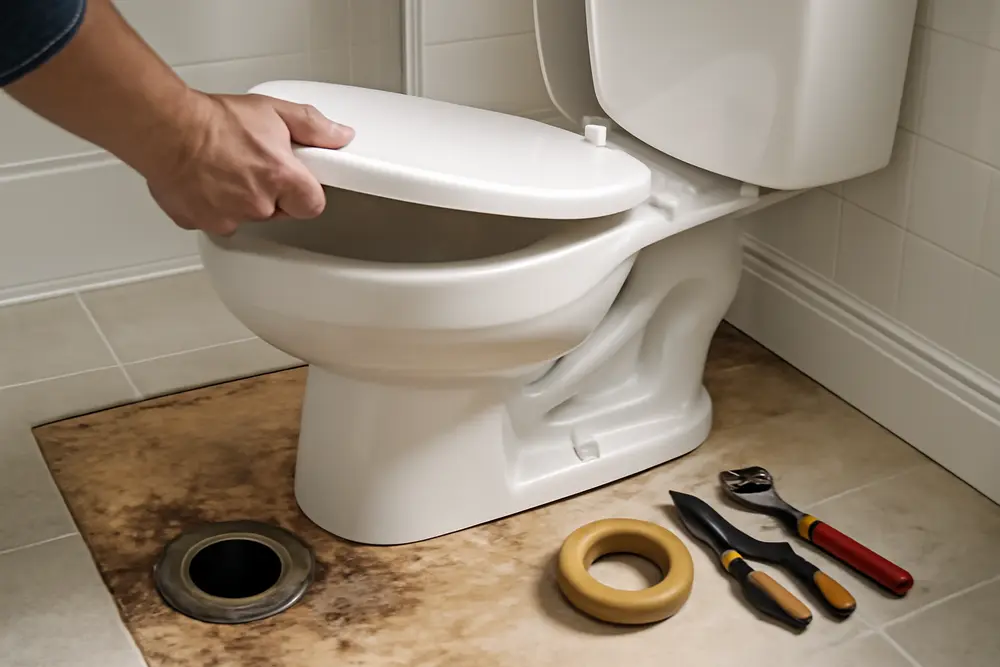
If your toilet could talk, it would apologize for the mess it makes when its wax ring gives up. Unfortunately, it can’t. A failing wax seal under a toilet is the quiet kind of leak that rots subfloors, feeds mold, and stinks up your bathroom without ever making a dramatic puddle. You don’t need to be a plumber to catch an early wax ring leak. You just need sharp eyes, a simple checklist, and a little respect for flange height. Here’s how to pull off toilet wax ring leak detection like a pro and lock in real subfloor rot prevention before your bathroom turns into a swamp with tile.
What A Wax Ring Actually Does
The wax ring is that humble donut of wax that sits between your toilet base and the toilet flange on the floor. Its job is simple but non-negotiable: create a watertight and airtight seal so flushed water and sewer gas go where they should. When the wax ring compresses correctly against the bowl horn and the flange, it forms a long-lasting seal. When the alignment is off, the flange is too low, or the toilet rocks, the wax gets distorted and you get a slow, sneaky leak. That moisture can creep into subfloor layers where you won’t notice it until the floor gets spongy or the baseboards start to discolor.
Early Signs You Can Catch
Silent does not mean invisible. Your bathroom will tattle if you know what to watch for. Here are the big tells that point to wax ring failure and hidden water damage:
Water that shows up after flushing. If you see fresh beads or a thin halo of water where the toilet meets the floor right after a flush, that is a classic wax ring red flag. Even small amounts count. Plumbing pros flag this in their warning lists for a reason.
Musty or sewage odor that lingers. Wax rings also block sewer gas. If the bathroom smells off and cleaning does not fix it, the seal might be compromised. Odors plus any dampness equals check the seal.
Wobble or movement. A toilet should feel like a rock. If it wiggles or pivots, the wax ring has probably lost compression or the flange is wrong for the floor height. Movement grinds the wax until leaks start.
Discoloration or soft flooring at the base. Look for yellowing, darkening, cupping, or edges lifting around the toilet. If the vinyl bubbles, grout flakes, or the wood darkens, water is sneaking out during flushes.
Mold near the base or baseboards. Spot fuzzy growth or that classic mildew outline? Moisture is feeding it from somewhere. The toilet base is a common culprit when supply lines and tanks check out.
Want a broader sweep of hidden leak suspects around your home too? We break down common leak hot spots in our guide to hidden water leaks.
Why Leaks Stay Hidden
Wax ring leaks rarely put on a show. Most of the water follows the path of least resistance under the toilet footprint, then into gaps in flooring layers or down the flange opening. A few reasons these leaks stay stealthy:
They’re low-volume but regular. You only get a dribble each flush, yet multiple flushes a day add up. Slow moisture is perfect for softening OSB or plywood subfloors.
Flooring can trap or redirect water. Caulked bases, tight vinyl, and certain tile installations can temporarily hold or redirect water, feeding it to the subfloor instead of letting it surface.
Odors get masked. Candles, cleaners, and fans can hide a low-grade sewer gas smell. If the odor returns quickly after airing out, the wax is a prime suspect.
The Right Flange Height And Seal Choice
Good installs prevent most wax ring horror stories. The best starting point is getting the toilet flange height right. A common target is roughly 1/4 inch above the finished floor. That height helps the wax compress firmly without overstretching it. If your flange sits below the finished floor, the wax ring has to span a bigger gap, which sets you up for misalignment and leaks. Reputable how-tos explain why that 1/4 inch target solves a lot of headaches, and sites like Angi outline the difference between too low and just right.
What if your flange is too low? You have options. Flange extenders can bring a low flange up to height. If the flange is damaged or very low, replacing it is the cleanest fix. You can get a primer on extenders and repair rings from guides like this overview on flange height fixes.
With height handled, pick the right seal. Here is a quick comparison you can use before you unbolt anything.
| Seal Type | When To Use | Pros | Watch Outs |
|---|---|---|---|
| Standard Wax Ring | Flange about 1/4 inch above floor | Inexpensive, proven, seals well when aligned | Does not rebound if toilet moves, can smear if misaligned |
| Extra-Thick Wax Ring | Flange slightly low compared to floor | Bridges a bigger gap, still simple to install | Too much wax can distort if overcompressed |
| Horned Wax Ring | Helps guide discharge into flange opening | Can aid alignment in some setups | Plastic horn can choke flow on some bowls or offset flanges |
| Wax-Free Seal | Useful where movement is a risk or for repeat resets | Less mess, some styles handle slight movement better | Must match bowl and flange specs carefully |
There is no one-size-fits-all choice. Match the seal to flange height and bowl geometry. If your flange height is correct, a standard wax ring is still a workhorse. For more on when to choose thicker wax or special styles, this wax ring comparison is a helpful explainer.
Leak Diagnosis Checklist
You can do a fast check without turning your bathroom into a construction zone. Here is a clean method that respects your time and your floor:
1. Visual scan after a flush. Dry the outside of the toilet base. Flush once and watch closely for 30 to 60 seconds. If water oozes at the base, stop there and plan a seal replacement.
2. Paper towel test. Slide a couple of dry paper towels around the base touching the caulk or the toilet skirt. Flush again. Any dampness on the towels is a hint that water is escaping under the base.
3. Gentle press-test. With the seat down and lid closed, press your weight straight down, then rock gently left-right and front-back. If you feel play, the toilet is not stable. Check that closet bolts are snug, but do not over-tighten or you can crack the base. Persistent wobble means wax damage is likely.
4. Odor check. Sniff near the base and behind the tank. A musty or sewer smell that keeps returning signals a seal problem even if you do not see water.
5. Moisture meter check. If you have a pinless moisture meter, scan the flooring right at the base and 6 to 12 inches out. Elevated readings compared to the rest of the bathroom are a hint that water is wicking under the finish floor. Pros use moisture mapping to confirm this kind of hidden spread during water damage restoration.
Does Caulking Stop Leaks?
No. Caulk around a toilet is there to keep mop water out and to make the joint look clean. It is not a pressure seal. Some jurisdictions ask you to caulk around the base for hygiene, and many plumbers recommend leaving a small gap at the back of the toilet so any future leak can show up as a visible trail. If you see water pushing through caulk, the wax ring is overwhelmed and it is replacement time.
When Should You Replace A Wax Ring?
If the toilet has been solidly installed with the right flange height and has not been disturbed, a wax ring can last many years. But life happens. Remodels, new flooring that changes the finished height, a poorly seated toilet, or a wobbly flange will stress the ring. Replace the wax ring if you see any of the signs above, whenever you reset or move the toilet, and anytime you find the flange sits low compared to the new finished floor. If your toilet has rocked enough to feel loose, assume the wax is toast.
From Soft Floors To Mold
Wax ring leaks do not just stain the grout. They soak the subfloor. Wood-based subfloors swell when wet, then lose structural strength if moisture lingers. That leads to spongy foot feel, lifted transitions, or tile cracks around the toilet. After enough wet cycles, you can see dark staining, fungus, and even mushrooms if it gets wild. If your floor is already soft, you may be past a simple seal swap and looking at repair of the subfloor layers. Signs of active subfloor trouble, like sagging or chronic musty odor, track with the warning list many flooring pros publish, similar to this subfloor rot overview.
And yes, mold loves a slow, repeatable source of moisture. It does not care that it is a bathroom. For more on how humidity and persistent dampness feed mold growth, we unpack it here: humidity and mold.
DIY Fix Or Call A Pro?
Swapping a wax ring is a common DIY project if the flange is sound and the floor is solid. You shut off the water, drain the tank and bowl, unbolt the toilet, lift it straight up, clean the old wax off both sides, set the new ring, and reset the toilet carefully over the bolts. Then you compress evenly, snug the bolts, reconnect the supply, and test. If that last sentence made your back ache, you can absolutely call us instead. A few reasons to bring in help:
The flange sits low or is damaged. This is where a quick ring swap can become a repair with extenders or a flange replacement. If you get this wrong, you’ll be right back where you started in six weeks.
There is wobble you cannot cure with bolt snugging. Loose subfloor or crushed underlayment will not hold a tight seal. Installing a new ring over a soft deck is lipstick on a hippo.
There are signs of active water intrusion under flooring. Elevated moisture readings, soft spots, black staining, or a sour odor spreading beyond the toilet footprint call for removal of affected materials and professional drying. Our team handles the tearout, drying, antimicrobial treatment, and rebuild so the issue does not come right back.
When you need full restoration, our water damage restoration process includes moisture mapping, controlled demolition, targeted drying, and documentation for your adjuster if insurance is in play.
Subfloor Rot Prevention
Here is how you stay ahead of the rot without turning toilet care into a hobby:
Respect flange height. If you ever change flooring, confirm your flange ends up about 1/4 inch above the finished floor. If it lands low, use an extender kit or replace the flange. Guides like Angi’s flange height article lay out the basics.
Stop the wobble. A solid base is non-negotiable. If the toilet rocks, fix the cause. Sometimes that means a new ring, sometimes shims, and sometimes subfloor repair. Tightening bolts alone is not a cure if the floor is flexing.
Use the right seal for your setup. Standard wax for correct height, extra-thick if the flange is a bit low, or wax-free when movement risk is higher. Avoid stacking multiple wax rings. It seems clever until it blows out under pressure.
Check after installs. New toilets or remodels deserve a follow-up. Do a paper towel test the week after install, then again at 30 days. Catching a micro-leak now is cheaper than replacing half the bathroom later.
Ventilate and manage humidity. Bathrooms that do not clear humidity stay damp. That makes minor leaks harder to spot and gives mold an open invitation. Use a vent fan that actually exhausts outside and run it long enough after showers. For the bigger picture on moisture control, start here: mold and humidity tips.
Toilet Wax Ring Leak Detection Tips
If you want the exact phrase to hang on your fridge, toilet wax ring leak detection boils down to four habits: watch for post-flush wetness at the base, sniff for recurring sewer or musty odors, test for movement, and scan flooring for subtle discoloration or softness. Add a low-cost moisture meter pass and you’re playing in the big leagues. Build those checks into your cleaning routine, especially in kids’ bathrooms or guest baths that do not get regular attention.
How Often Should You Check?
Give the base a quick inspection monthly. Bathrooms used by toddlers or teenagers need it even more because toilets get the Olympic treatment in those lanes. After any flooring work or a toilet reset, inspect weekly for the first month. If you rent out a unit or manage property, put it on your turnover checklist and document what you find. A 30-second photo before and after a flush can save you a deposit dispute later.
Common Wax Ring Myths
“Caulk will stop the leak.” It won’t. Caulk is for aesthetics and to keep mop water out of the joint. If water still finds a way through the wax, it will find a path around caulk too.
“Two wax rings are better than one.” Stacking rings is a gamble. They can shift and blow out under flushing pressure. Fix the flange height and use the correct single seal instead.
“If I don’t see water, there is no leak.” Many leaks wick under flooring, especially with vinyl or tightly caulked bases. Odor, movement, and soft flooring are just as telling as visible water.
What If The Subfloor Is Already Damaged?
If the floor feels spongy around the toilet, you may be dealing with delaminated plywood or swollen OSB. At that point, a wax ring swap is just a bandage. The right fix is to pull the toilet, open the affected area, and remove damaged materials down to sound framing. Then you dry the structure, treat for microbial growth, replace subfloor and underlayment, correct the flange height, and reset the toilet with the proper seal. If that sounds like a lot, that is because it is. This is where a restoration crew earns its keep. We do it cleanly, quickly, and with documentation your insurer can understand.
Picking Products That Help
Not all rings and flanges are created equal. Choose a ring that matches your bowl outlet and flange opening size. If you’re using a horned ring, make sure the horn will not restrict flow inside the bowl horn. If you have an offset flange, consider wax-free options designed to handle misalignment. And always use new closet bolts and a fresh supply line when you reset a toilet. Saving five bucks on old parts has funded a lot of mold jobs people did not want to pay for.
What Pros Check That Homeowners Miss
When we get called for a “weird bathroom smell,” we do not just look at the base and shrug. We check the flange integrity, subfloor moisture gradient, baseboard staining on adjacent walls, ceiling stains below the bathroom, and the toilet tank for condensation issues that can mimic leaks. We also look at ventilation performance and door undercut, because poor airflow keeps surfaces damp and makes leak detection tougher. Then we give you clear next steps. Sometimes it is a simple reset with the right ring. Other times it is a controlled open-up and dry-out because the subfloor has already lost strength.
Want A Fast Way To Prove A Leak?
If your base is not caulked solid all the way around, sprinkle a ring of dry baking soda at the joint where the toilet meets the floor. Flush and watch. If the soda dissolves or creates a wet trail, the seal is probably compromised. It is low-tech, but it works. No, it is not a lab test, but it beats guessing.
When To Skip DIY And Call Us
Pick up the phone if you see pooled water after every flush, if there is wobble you cannot correct, if moisture readings spike beyond the footprint, or if the floor is already soft. Also call if the flange is corroded, cracked, or sitting well below the finished floor. The fix in those cases is straightforward for a tech with the right tools and far cheaper than a second round of tearout after a failed DIY attempt.
Stop Rot Before It Starts
If you take one thing from this, let it be this mouthful of SEO truth wrapped in practical advice: toilet wax ring leak detection is your best shot at real subfloor rot prevention. Do the quick checks, honor that 1/4 inch flange height, pick the right ring, and kill the wobble. If you think the leak beat you to it, we can confirm it with moisture mapping and fix it the right way. Need a hand or want a second opinion that is not from your cousin who “knows toilets”? Reach out to our team at Sapphire Restoration. We’ll keep the water where it belongs and your floor solid under your feet.