
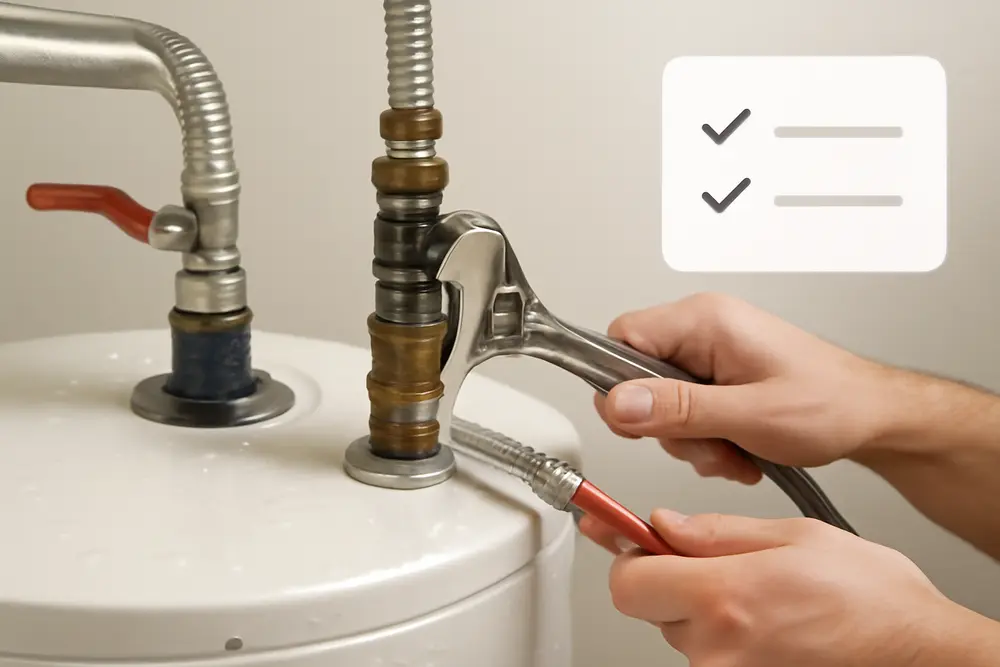
If your water heater ever decides to cosplay as a geyser, you want two things: an early warning and a fast plan. Good news, you can catch most heater leaks before they wreck your floor with two quick checks you can do today. We’re talking an anode rod inspection and a pressure relief valve test. Do those on schedule, add a couple of simple maintenance moves, and you’ll cut way down on surprise leaks and the pricey water damage that follows. I restore soggy houses for a living, and trust me, prevention beats pulling soaked carpet out of a hallway at 2 a.m. every time.
Why Heaters Leak
Leaks almost always trace back to corrosion or pressure issues. Inside a tank-style heater, the steel tank is constantly battling water and oxygen. The anode rod is the sacrificial hero that takes the hit, but once it’s used up, corrosion starts chewing through the tank. Pressure is the other troublemaker. If your temperature and pressure climb too high, a failing relief valve can let that pressure hammer gaskets, fittings, and seams until they drip or split. Old drain valves, loose connections, and rough water conditions accelerate all of this. Most tank heaters tap out around 8 to 12 years, and hard water shortens that window by stacking mineral sediment at the bottom, which overheats the tank and stresses everything around it. Tankless units last longer, but scale buildup and neglected safety components still cause leaks and performance issues.
Check 1: Anode Rod Inspection
What Is An Anode Rod
Inside the tank there’s a rod made of magnesium, aluminum, or an aluminum-zinc blend. This rod lures corrosion away from the steel tank. It sacrifices itself, slowly dissolving over time. When it’s mostly gone, corrosion stops nibbling the decoy and starts chewing the tank instead. That’s when pinhole leaks, rusty water, and heater heartbreak begin.
Warning Signs Your Anode Is Failing
Catch these symptoms and you can swap the rod before the tank pays the price:
Hot water turns rusty on you. An orange or brown tint from the hot side usually means corrosion products are on the move. A rotten-egg odor when you run hot water. That sulfur smell often happens when certain bacteria react with magnesium and sulfate in the tank. Loud rumbling or popping when the heater runs. Sediment and corrosion deposits trap steam bubbles that explode as the burner or elements heat up, which is the soundtrack of a stressed tank.
How To Do A Quick Anode Rod Inspection
Plan for 20 to 40 minutes. If you can operate a socket wrench without scaring the neighbors, you can probably do this.
1. Turn off power or gas. Electric heaters: flip the breaker off. Gas heaters: set the gas control to pilot or off. Let water cool if you can.
2. Shut off the cold-water supply to the heater. The valve is on the cold line at the top.
3. Relieve pressure. Open a nearby hot-water tap for a minute. This keeps water from blasting you when you open the tank.
4. Find the anode rod hex head. It’s usually on the top of the tank, sometimes under a plastic cap. Some units hide it in the hot-water outlet. Check your manual if you’re not seeing it.
5. Crack it loose with a socket and breaker bar. These can be stubborn. Keep the tank steady so you don’t twist plumbing. If the rod is segmented, you can remove it in pieces.
6. Inspect what you pull out. If the rod is down to a thin wire, has big chunks missing, or is under about half an inch thick for most of its length, it’s done. Replace it. If it looks mostly intact, you can reinstall it with fresh thread sealant and check again in a year or two.
Choosing And Replacing The Rod
Match the diameter and length to your heater model. Magnesium offers strong corrosion protection and is usually the default. Aluminum or aluminum-zinc can help if you get that sulfur odor, though fixing the odor sometimes also requires sanitizing the tank. Use thread sealant rated for potable water on the new rod, tighten it firmly without going gorilla-level, then restore water and power. While you’re at it, connect a hose to the drain valve and flush a few gallons to kick out sediment. A quick flush after an anode swap is like brushing your teeth after candy.
How Often To Inspect
Plan an anode rod inspection every 2 to 3 years for average city water, and yearly if you have hard water, a water softener, or a full house of hot-shower lovers. Frequent short draws and high usage age rods fast. If your tank is older than eight years and you have no record of rod swaps, check it sooner rather than later.
Check 2: Pressure Relief Valve Test
What The T&P Valve Does
Your temperature and pressure relief valve is the small valve mounted at the top or side of the tank with a little lever. If water gets too hot or pressure spikes above the safe zone, it pops open and sends hot water down the discharge tube, away from your face and flooring. Typical set points are around 150 psi and 210 degrees Fahrenheit. If this valve jams, a bad pressure situation can escalate quickly, which is why you should never cap or plug the discharge pipe.
Signs The Valve Is Failing
A steady drip from the discharge tube when the heater is not firing. A handle that will not lift or that flops loosely. Visible rust, crusty mineral deposits, or water stains around the valve body. Testing the valve produces no flow, or it opens but refuses to reseat and keeps flowing. Any of these means the valve needs attention.
How To Do A Pressure Relief Valve Test
Be careful. This valve can discharge very hot water. Keep kids and pets away, and do not put your hand under the discharge outlet.
1. Place a bucket under the discharge pipe, or route the pipe to a drain if it already connects there.
2. Briefly lift the lever until water flows, then release it. You should hear and see water run for a second or two, then stop completely. The lever should snap back to closed.
3. If it fails to close or keeps dripping, shut off the cold-water supply and power or gas, then replace the valve. They’re inexpensive, but they’re safety gear, so install correctly with thread sealant and make sure the discharge pipe points down, is unobstructed, and ends where it will not scald anyone.
Do a quick pressure relief valve test every 6 to 12 months, or follow the heater manufacturer’s schedule. Skipping this lets mineral buildup glue the valve shut, which is not the kind of surprise you want.
Fast Shutoff Plan
If you spot a leak, seconds matter. Here’s the fastest way to stop the mess before it spreads across the house.
1. Kill the heat. Electric: switch the breaker to off. Gas: set the control to off or pilot. Cutting heat reduces pressure and stops the tank from firing while it’s stressed.
2. Close the cold-water supply valve to the heater. This stops fresh water from feeding the leak.
3. Open a hot-water faucet in the house. This relieves internal pressure, which slows leaks and makes the tank safer to drain.
4. Connect a garden hose to the drain valve at the bottom of the tank and run it to a floor drain or outside. Open the drain slowly. If the drain valve is clogged with sediment, carefully work it with the water off, or call a plumber if it will not budge. Never force a plastic drain valve.
5. If the leak is coming from a fitting, tighten gently after pressure drops. If it is coming from the tank body, do not keep refilling it. The tank is compromised and needs replacement.
Cleanup And Damage Control
Water always finds a way, so move fast. Mop or towel up visible water. Use a wet-dry vacuum to pull standing water from floors and under baseboards. Get air moving with fans pointed across the damp area, not straight down into it. A dehumidifier near the heater keeps moisture out of the walls and prevents that humid, musty funk from setting in. Lift cardboard boxes, rugs, and anything absorbent off the floor. If materials stay wet longer than 24 to 48 hours, you risk microbial growth behind walls or under flooring. If you suspect water ran under walls or into adjacent rooms, pull baseboards and check. This is the moment to call a restoration crew that handles structural drying if you see bubbling paint, swelling trim, or wet subfloor.
Preventive Maintenance Moves
There is nothing glamorous about water heater maintenance, but it beats buying a new tank. Flush a few gallons from the drain valve every 6 to 12 months to eject sediment. Keep the thermostat around 120 degrees Fahrenheit to reduce pressure and scale, while still hot enough for comfortable showers. Glance at supply lines, the drain valve, and fittings once a quarter for tiny weeps. If your home has a closed water system and you struggle with recurring pressure spikes, ask a plumber about an expansion tank. On the electrical side, verify wiring is intact and panels are closed. On the gas side, make sure the venting is secure and clear. Write the installation year on the tank with a marker, so you are not guessing its age five years from now.
Tank Vs. Tankless Tips
Tankless heaters skip the big steel cylinder, which dodges a lot of tank corrosion. They still need love, just a different kind.
| Topic | Tank Heaters | Tankless Heaters |
|---|---|---|
| Anode Rod | Yes, inspect every 1 to 3 years | No anode rod present |
| Pressure Relief | Test T&P valve 6 to 12 months | Has a relief device, keep the drain line clear and inspect per manual |
| Sediment/Scale | Flush tank to remove sediment | Descale with vinegar or manufacturer kit as required by hardness |
| Typical Leak Points | Tank seams, drain valve, fittings | Heat exchanger gaskets, isolation valves, connections |
| Service Life | Often 8 to 12 years | Often 15 to 20 years with maintenance |
For tankless units, install isolation valves, then descale on schedule using the manufacturer’s process. Hard water creates scale that narrows passages and boosts pressure and temperature, which stresses seals and can trigger leaks. Keep air intake and exhaust clear so the burner runs correctly. And yes, even tankless units need their relief device pipe terminated safely to a drain or bucket area.
When To Call A Pro
There’s DIY pride, and then there’s knowing when a pressurized hot-water appliance is getting spicy. If you see active tank body leaks, seam rust that flakes off in sheets, or a T&P valve that will not stop running after a test, call a licensed pro. Anode rods that refuse to loosen, valves that are welded by scale, or electrical work you are not comfortable with are all reasons to tag in help. If your tank is pushing 10 to 12 years and you are seeing rusty hot water, frequent rumbling, and leaking fittings, replacement may be smarter than throwing parts at it. If the leak already soaked walls or floors, a restoration team can document the damage for insurance, remove wet materials safely, and dry the structure down to target moisture levels.
FAQs
You have questions, your heater has opinions, and I have answers from the front lines of water damage cleanup.
How much does replacing an anode rod cost?
Parts run in the modest range compared to a new tank, and you can usually find magnesium or aluminum rods that fit your model without drama. If a pro handles it, expect to pay for the visit and labor to break the old rod free, flush sediment, and reseal the new one. It is still far cheaper than replacing a corroded tank and repairing water damage.
Can I test the T&P valve myself safely?
Yes, if you follow the basics. Keep hands away from the discharge outlet, lift the lever briefly, and be ready to shut the unit down if the valve will not reseat. Wear gloves and eye protection. If anything seems off, replace the valve rather than trying to coax a sticky safety part back to life.
Does a water heater leak always mean I need a new unit?
Not always. Leaks at fittings, nipples, and drain valves often come down to gaskets or a tired valve. A leak from the tank body, especially near the base, usually means the tank is corroded through and needs replacement. If the heater is older and showing multiple warning signs, replacing it before it fails hard is usually the cheaper path long term.
How often should I schedule an anode rod inspection?
Every 2 to 3 years for average water, and once a year if you have hard water, a softener, or heavy usage. If you just moved into a home with an older heater and have no maintenance history, check it now so you are not guessing.
What temperature should my water heater be set to?
Around 120 degrees Fahrenheit works for most homes. It balances comfort with reduced scale formation and lower pressure stress on the system. Some households adjust higher for specific sanitation needs, but higher temperatures can increase risk, so confirm with your manufacturer and add mixing valves if needed.
Your Two Fast Checks, Wrapped Up
Put an anode rod inspection and a pressure relief valve test on your calendar. Those two five-to-fifteen minute checks are the cheapest insurance against surprise leaks you can do. If you want a deeper tour, set a reminder to flush the tank, eyeball fittings, and verify the discharge line is clear. If your heater already leaked and your floor is squishing, call the team that cleans this mess up daily. We can stop the leak, dry the structure, and get you back to normal faster than your water heater can say burble.
If you are not sure where to start or you already have water showing up where it should not, check our quick guides and services:
Hidden Leak Locations explains common leak spots, including water heaters. If the damage is already done, our Water Damage Restoration Process shows how we handle cleanup the right way. And if you are tempted to ignore a tiny drip, read Ignoring Water Leaks Can Cost You before that drip graduates to a downstairs ceiling stain.