
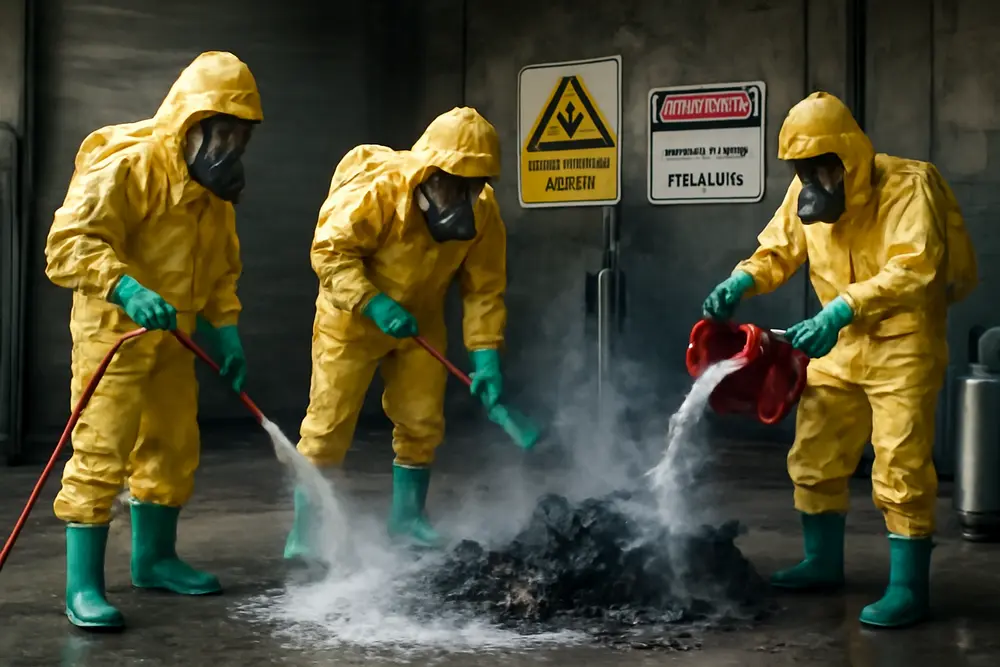
If your e-bike, power tool, phone, or home battery pack decided to throw a flamethrower party, you are not just dealing with a basic soot job. Lithium-ion battery fires are chemistry class with bad intentions. The smoke is loaded with fluoride chemistry that turns into hydrofluoric acid when it meets moisture, and that acid does not care about your granite, your glass, or your lungs. This guide lays out how lithium-ion battery fire cleanup is different, what hydrofluoric acid decontamination actually involves, and how to make the right calls on what to clean, what to replace, and how to make the place safe again.
What Makes Li-ion Fires Different
Standard house fires leave carbon soot, char, and a grab bag of burnt polymers. Nasty, yes, but relatively predictable. Lithium-ion battery fires add an extra trick: the electrolyte salt lithium hexafluorophosphate, often written as LiPF6, and fluorinated binders like PVDF. When a cell goes into thermal runaway, those fluoride compounds decompose at high temperature and eject toxic fluorinated gases. Two of the top offenders are hydrogen fluoride, often called HF, and phosphoryl fluoride, POF3. HF is the one that keeps restoration pros up at night.
How much HF are we talking about? Controlled testing has measured HF generation on the order of tens to hundreds of milligrams per watt-hour of battery capacity. Scale that up, and a large pack can release kilograms of HF if conditions are right. Now put that inside a garage or living room and you have a corrosive, toxic environment even if the flames looked contained. The plume does not have to be dramatic to cause serious chemical damage throughout a home.
The Hidden Aftermath In Your Home
HF is a gas that eagerly becomes hydrofluoric acid once it finds moisture. That could be humidity, cooling condensation, or the very water used to knock down the fire. The result is a thin, often invisible acid film that can etch glass and ceramics, discolor or pit metal, embrittle some plastics, and react with minerals in concrete and mortar. It also loves to hitch a ride with suppression water and settle into cracks, insulation, and dust where it can keep corroding and off-gassing.
That off-gassing is why the smell situation can be so confusing. You might pick up an acrid sting in your nose and throat, only to have it fade once you air things out a little. Odor is not a reliable indicator of safety. Acid residues can sit quietly on surfaces and inside porous materials long after the air seems clear. If your HVAC was running, expect residue in supply and return paths, inside the air handler, on coils, and in ductwork seams. If the suppression water ran under baseboards or into wall cavities, you can assume the acid did too.
Health Risks You Should Not Test
Short version: do not mess with HF. Inhalation can inflame and scar airways, irritate eyes, and cause deep chemical burns to tissue. Skin contact is even trickier. HF does not just burn at the surface. It penetrates and binds calcium in your body, which can lead to delayed pain and serious systemic toxicity. Eyes are at extreme risk. Even low concentrations can injure the cornea. Residents and first responders exposed to battery fire smoke have developed persistent breathing problems, including reactive airway dysfunction syndrome. Pets are vulnerable too because they are closer to the floor where heavier gases and residues settle.
If you suspect HF exposure, get medical help. For skin contact, calcium gluconate gel is a recognized first aid, but it is not a DIY cure. It buys time on the way to a clinician who knows how to treat HF injuries. For airborne exposure, leave the space, get fresh air, and seek evaluation if you have irritation, coughing, or chest tightness.
First Steps Right After The Fire
Once the fire is out and the scene is released by the fire department, assume you are standing in chemistry residue, not just regular soot. Keep people and pets out of affected rooms. Do not start wiping surfaces. Do not kick on fans or run the HVAC. Airflow spreads residues into places that are far more expensive to clean.
If you can safely introduce some outdoor ventilation without pushing air through the rest of the house, crack a downwind window or use a box fan exhausting to the outside from the source room. Skip atomizing misters or casual water sprays. Water that is not part of a proper neutralization plan can increase HF formation and carry contamination farther. If you need to enter for essentials, wear acid-resistant gloves, eye protection, and a properly fitted respirator with an acid-gas cartridge rated for HF. A dust mask is not going to cut it here.
Document conditions with photos and video, then call a restoration company that has true experience with lithium-ion battery fire cleanup and hydrofluoric acid decontamination. Also notify your insurance carrier early, and ask whether they want an independent industrial hygienist to guide testing and clearance. Getting the right team in from the start saves you from doubling back and ripping out half-done work later.
How Pros Contain And Decon
Battery fire cleanup still includes core fire restoration steps like soot removal and odor control, but we add an acid neutralization playbook and much tighter containment. The goal is to stop the spread, remove what cannot be saved, make what is left chemically safe, then confirm the space is fit to live in again.
| Stage | What That Really Means |
|---|---|
| Assessment And Containment | We isolate affected areas with plastic barriers and negative air machines that vent outdoors through carbon media. We map contamination using corrosion checks, surface pH testing, and targeted wipe sampling for fluoride. If the HVAC pulled smoke, we contain registers and the air handler to avoid cross-contamination. |
| Selective Demolition | Porous materials that soaked up acid and smoke usually have to go. That often means carpet and pad, upholstered finishes, drywall near the source, stained baseboards, ceiling tiles, and insulation. Controlled removal keeps debris from becoming airborne dust that wanders the house. |
| Neutralization And Cleaning | We apply calcium-based neutralizers to react with fluoride and reduce corrosivity, then follow with alkaline degreasers to cut soot and tar-like films. Metals and glass get special handling because HF attacks both. Rinse cycles are planned and contained so we are not just relocating acid. |
| Air Cleaning And Odor Control | Air scrubbers run with HEPA for particulates and activated carbon designed for acid gases. After surfaces are neutral and porous debris is gone, we may use thermal fogging, vapor-phase adsorbents, or in select cases hydroxyl or ozone treatment. Any advanced deodorization happens only when it is safe for materials and occupants. |
| Verification And Rebuild | We retest surface pH to target neutral readings and collect post-cleaning fluoride wipes for lab analysis when appropriate. HVAC components are cleaned or replaced, then filters are changed. Only when air and surface testing pass do we close and move into repairs and finishes. |
What Neutralizes HF Residue?
Hydrogen fluoride is best tamed by calcium. The chemistry is simple: calcium binds fluoride strongly and forms calcium fluoride, which is far less soluble and far less aggressive. That is why industry-standard surface neutralizers for HF residues often include calcium carbonate or calcium hydroxide. On skin, first aid uses calcium gluconate gel for the same fluoride-grabbing reason, while a clinician evaluates and treats you.
Here is what that means for a house. If testing suggests acid residues, we apply a calcium-bearing neutralizer compatible with building materials, let it react, and manage dwell times carefully. We do not spray indiscriminately. We keep it controlled so it does not trickle into wall cavities that we are not opening. After neutralization, we wash with an alkaline cleaner formulated for soot and combustion byproducts, then rinse and dry thoroughly. For delicate surfaces like certain natural stone or stainless steel, we spot test and adjust chemistry so we neutralize without etching or streaking the finish.
DIY mixes are not the move. Vinegar and baking soda will not solve an HF problem, and mixing random cleaners can gas you. If you must handle a small, isolated spot while waiting for a pro, avoid acids, avoid bleach, and do not combine products. Suit up with acid-resistant gloves like neoprene or butyl, chemical splash goggles, and a respirator with an acid-gas cartridge that lists HF. Then step away and let a trained crew do the rest.
Odor Control That Actually Works
Fire odor lives in two neighborhoods: particles and gases. HEPA filtration grabs fine soot and ash particles. Activated carbon is what grabs many of the nasty gases, including some acid gases. For lithium-ion battery fires, we choose carbon media or specialty adsorbents that target acid gases specifically, and we place scrubbers to move a lot of air through those filters without blasting residues into clean rooms.
We also go after the odor reservoirs that do not wave their hands and say pick me. Insulation near the source is a classic sink. So is open-cell foam, carpet padding, and duct liner. Get rid of odor reservoirs and the whole building becomes easier to clear. After neutralization and removal, deodorization tools like thermal fogging can chase odor molecules into the same pores they came from. Hydroxyl generators can be helpful late in the process. Ozone can work in unoccupied, carefully prepped spaces, but it can also age rubber and dull finishes, so we treat it as a precision tool, not a cure-all. HVAC cleaning is mandatory if it saw smoke, and that includes evaporator coils and housings where sticky films love to hang out.
Replace Or Restore?
Cleaners and neutralizers can only do so much if the material is a sponge. If acid and smoke penetrated drywall, ceiling tiles, carpet, and insulation, replacement is usually faster, safer, and sometimes cheaper than heroic cleaning. Glass that shows frosty etching likely will not polish out. Metals that already started pitting can keep corroding if you leave microscopic residues behind. Fasteners and hangers in a hot, acidic plume deserve a close look too. The HVAC question is often all or nothing. Lightly exposed sheet metal ducts may clean well, but flex duct packed with soot and sticky residues is a replacement candidate.
Electronics are their own headache. Even when they power on after a fire, residues can keep corroding traces and connectors. For small devices, replacement beats repair. For larger appliances or energy storage systems, get a qualified technician to evaluate condition and warranty. Document everything for your insurer with photos, serial numbers, and reports. Most homeowner policies cover fire and smoke, and hazardous cleanup linked to a covered fire often falls inside that umbrella, but you should confirm scope and any special handling requirements for hazardous waste disposal in your area.
Hiring The Right Team
You want a company that understands both smoke behavior and HF chemistry. Ask about certifications like IICRC Fire and Smoke Damage Restoration Technician and Odor Control Technician, plus HAZWOPER training for hazardous sites. Ask if they bring in an industrial hygienist for testing and clearance on HF jobs. Get clarity on their neutralization methods, what they measure before and after, and how they document air and surface safety for re-occupancy. If they talk only about ozone and fogging and never mention acid neutralization, keep shopping.
Real-World Lessons
Utility-scale energy storage fires have pushed entire neighborhoods to shelter because of HF release. While your garage is not a battery plant, the chemistry is the same. Even a single e-bike pack or a cluster of tool batteries can generate HF in a volume that matters in a closed space. Firefighters know this and often keep distance with copious ventilation during and after suppression. In homes, that means we treat affected zones with the same respect, and we do not rush occupancy until neutralization and testing are complete.
FAQ: Lithium-ion Battery Fire Cleanup
Is It Safe To Clean Up Battery Fire Soot Yourself?
Not without the right gear and training. HF and other fluoride residues are corrosive and can injure skin, eyes, and lungs. At minimum you need acid-resistant PPE and an acid-gas respirator, plus a plan to neutralize residues before wiping. Most homeowners are better off letting trained crews handle it.
What Does HF Smell Like?
People describe it as sharp, acrid, and irritating, but odor is a terrible safety gauge. HF can injure you even if you do not smell much, and other smoke components can mask or overwhelm the odor. Testing and neutralization matter more than your nose.
Will Glass And Ceramic Be Ruined?
HF can etch both. Light haze might polish out with specialty compounds, but visible frosting or pitting usually means replacement. Test a small area after neutralization before committing to restoration of big panes or fixtures.
Are Dishes, Pots, And Pans Safe After A Battery Fire?
Glazed ceramics and glass that did not etch can sometimes be saved after thorough neutralization and multiple detergent washes. Aluminum and stainless can stain or pit. Food-contact safety is not worth guessing on. Ask your cleaner to test surface pH and fluoride, and when in doubt, replace.
How Do You Test When The House Is Safe Again?
We use a mix of methods. Surface pH swabs should trend toward neutral after cleaning. Wipe samples for fluoride go to a lab to confirm residues are down. Air sampling can include badges or tubes for HF and continuous monitors for particulates and VOCs. Only after those checks pass do we recommend re-occupancy and rebuild.
Will Insurance Cover Hydrofluoric Acid Decontamination?
Most policies that cover fire and smoke also cover the necessary cleanup, including specialty decontamination tied to the fire. Coverage varies, so get your adjuster looped in early and share testing plans and reports.
Can I Just Ventilate And Call It Good?
Ventilation helps with immediate gases, but residues settle and keep causing trouble. Without neutralization, you can get ongoing corrosion, phantom odors, and irritated airways. Air out, yes, then bring in a team that can neutralize and verify.
Tools We Use When It Counts
For those who want to know what is actually in the truck, here is how we stack the deck. Our air scrubbers run HEPA plus the right activated carbon for acid gases, with ducting that exhausts to the outdoors when possible. We carry calcium-bearing neutralizers designed for HF residue, not bottled guesswork. Gloves are neoprene or butyl for better acid resistance, goggles are chemical splash rated, and respirators carry NIOSH-approved acid-gas cartridges rated for HF. For verification, we keep surface pH kits on hand and partner with accredited labs for fluoride analysis. Inside the HVAC, we look at coils, blower housings, and duct interiors, and we are not shy about recommending replacement of flex duct and filters that got a face full of smoke.
What Homeowners Can Do Right Now
If you had a lithium-ion battery incident, isolate the area and do a quick mental checklist. Was the HVAC running during the event? Expect a wider cleanup. Do you see glass haze or metal spotting near the source? That points to acid exposure. Any suppression water or foam carryover into adjacent rooms? That tells us where residues may have traveled. Jot it down and share it with your restoration team. The faster we can map the problem, the faster we can contain it and keep cleanup surgical instead of turning into a whole-house project.
When You Want A Straight Answer
Hydrofluoric acid is the villain with a lab coat. It is invisible, it is persistent, and it has zero respect for your finishes. The fix is not fairy dust, it is methodical containment, calcium-first neutralization, targeted removals, and proof that what is left is actually safe. If that sounds like overkill for a smoky tool battery, consider this: the cost of doing it twice, or living with hidden corrosion and chronic irritation, is higher. If you need help, we handle lithium-ion battery fire cleanup and hydrofluoric acid decontamination every week, and we are happy to walk your insurer through the why behind every step.